Hangzhou, China
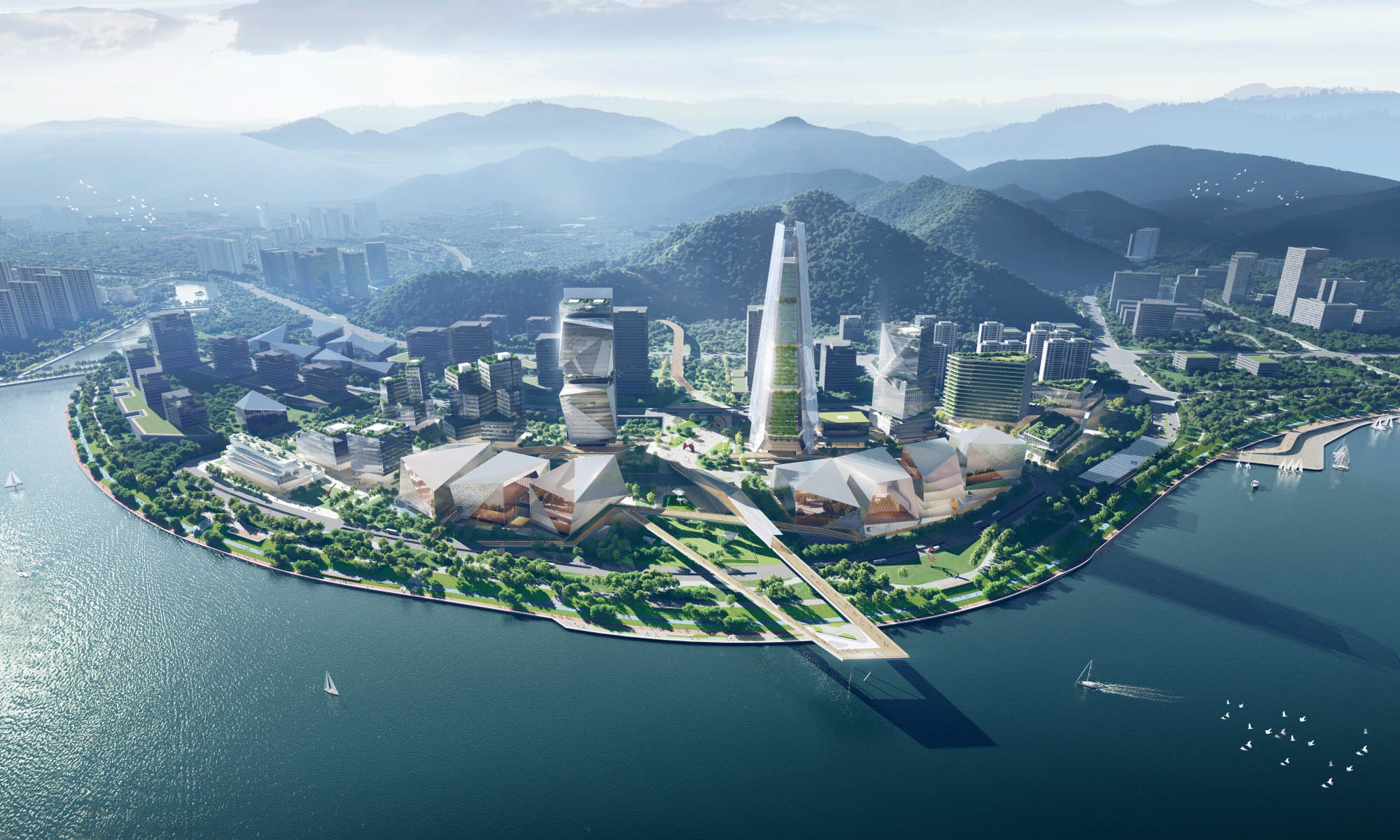
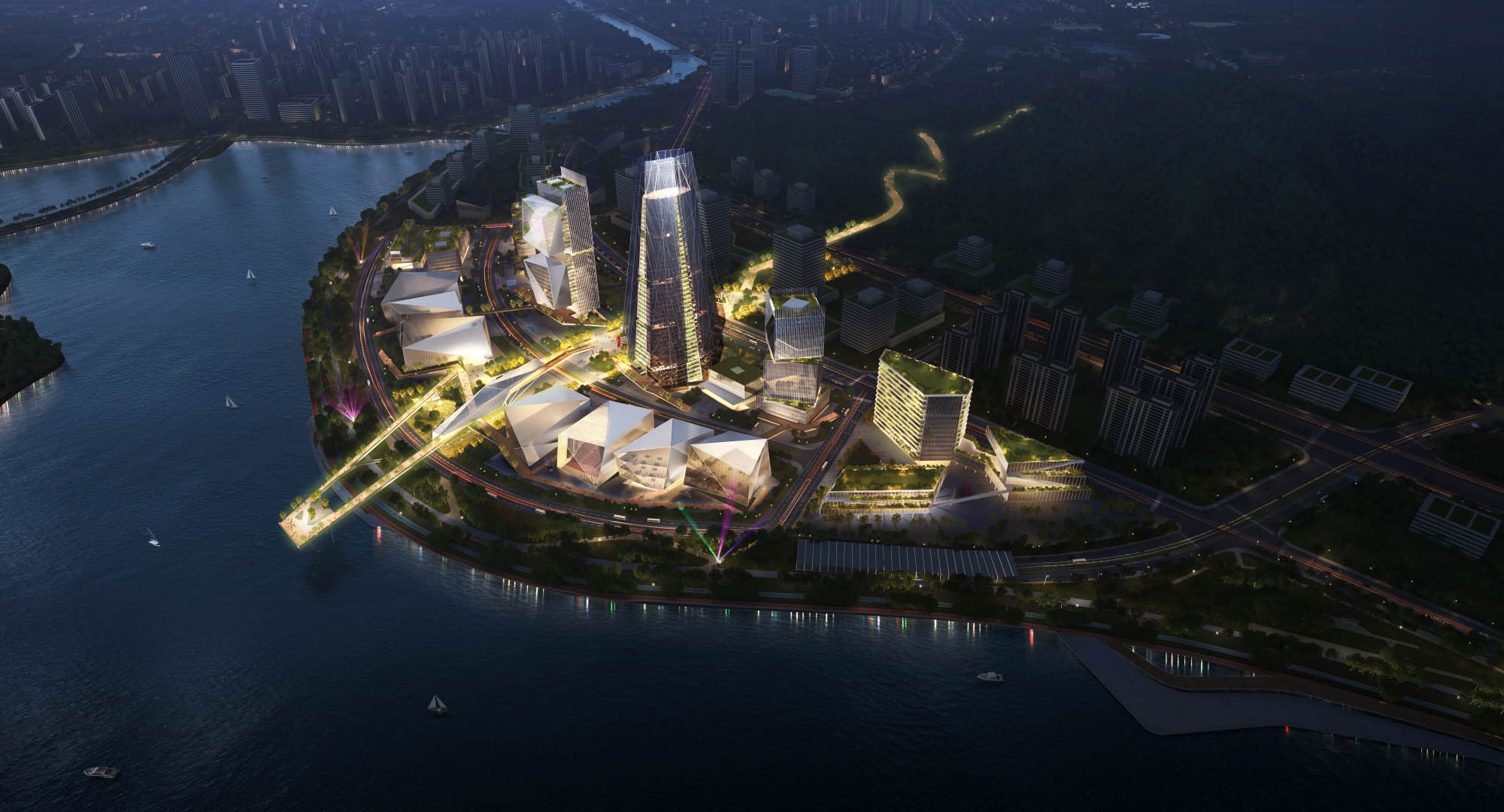
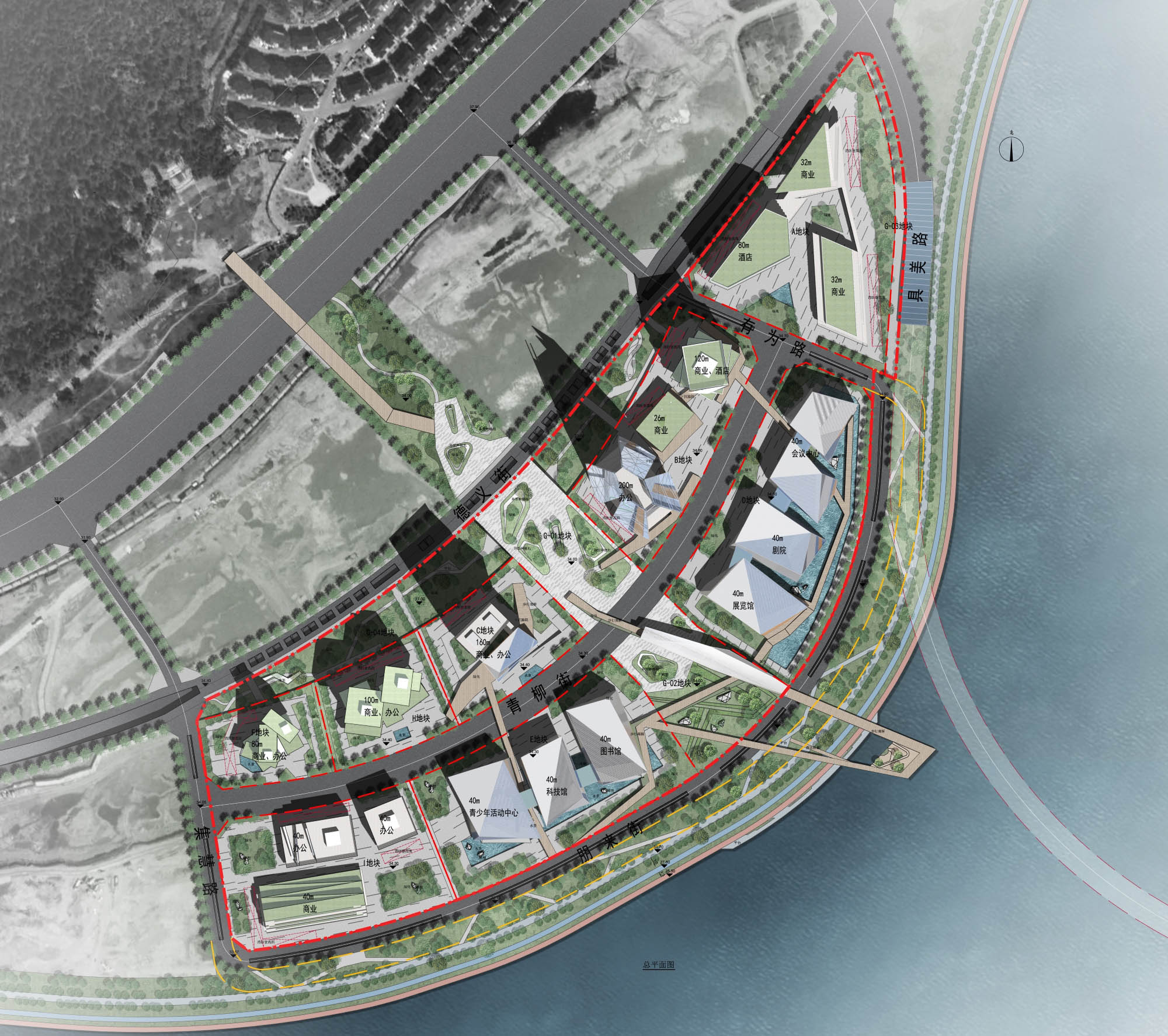
Located in western Hangzhou, Lin’an has gradually developed around the vision of a “city-lake symbiosis,” with Qingshan Lake becoming a key ecological and civic center. As the core district of this new urban framework, the Linan City Lobby integrates conference facilities, offices, hotels, and public cultural programs into a comprehensive urban destination. The project is envisioned as a new civic platform capable of attracting international resources while representing the future identity of the district.
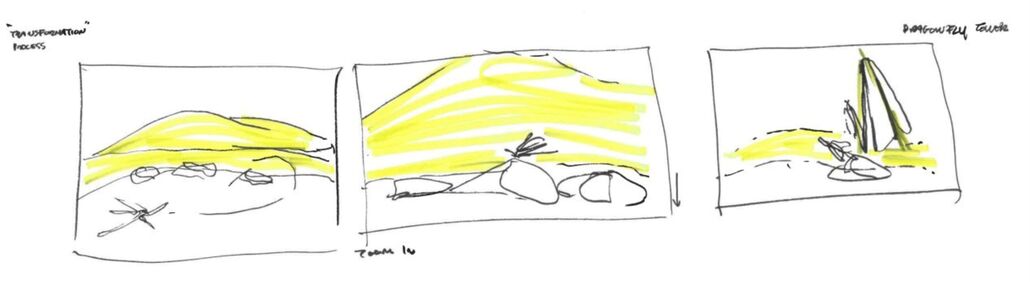
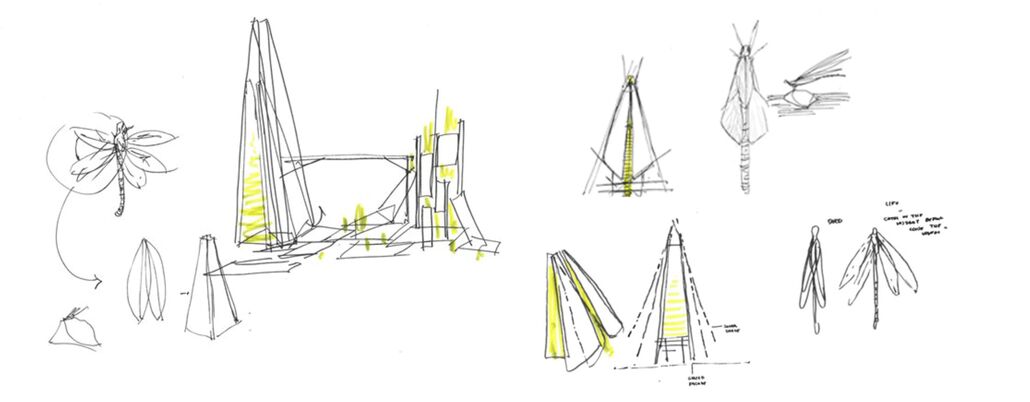
The design originated from an image of the lakeside landscape: flowing streams, scattered stones, and dragonflies hovering above the water. The refined structure and lightness of dragonfly wings inspired the architectural language of the project. At the same time, the dragonfly’s dependence on healthy ecological environments reflects the natural character of Lin’an itself. The project translates these observations into a spatial concept that reconnects architecture with the surrounding landscape.
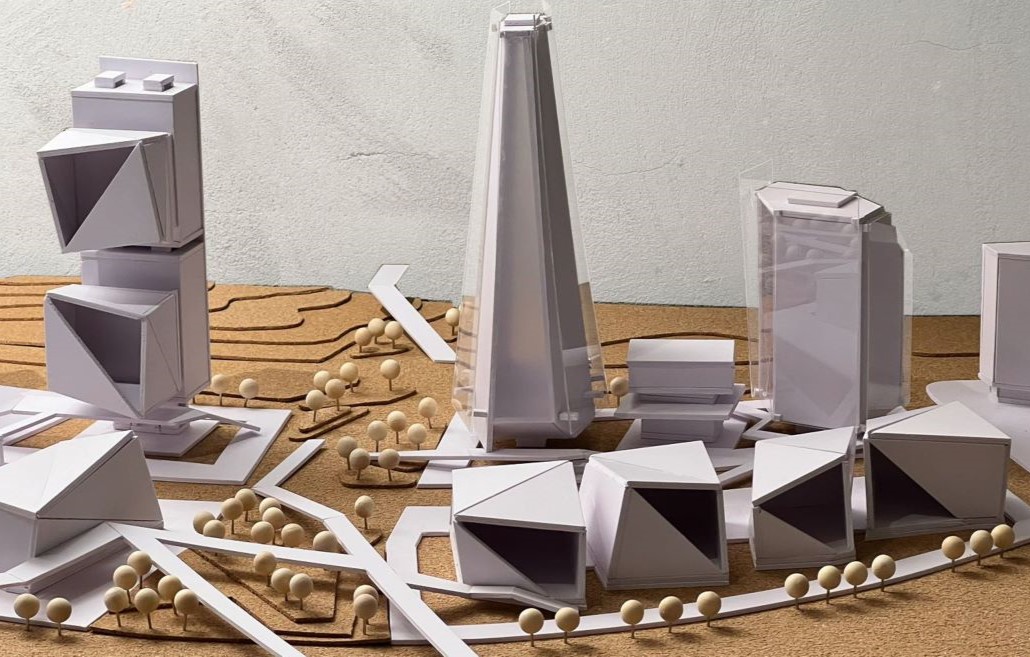
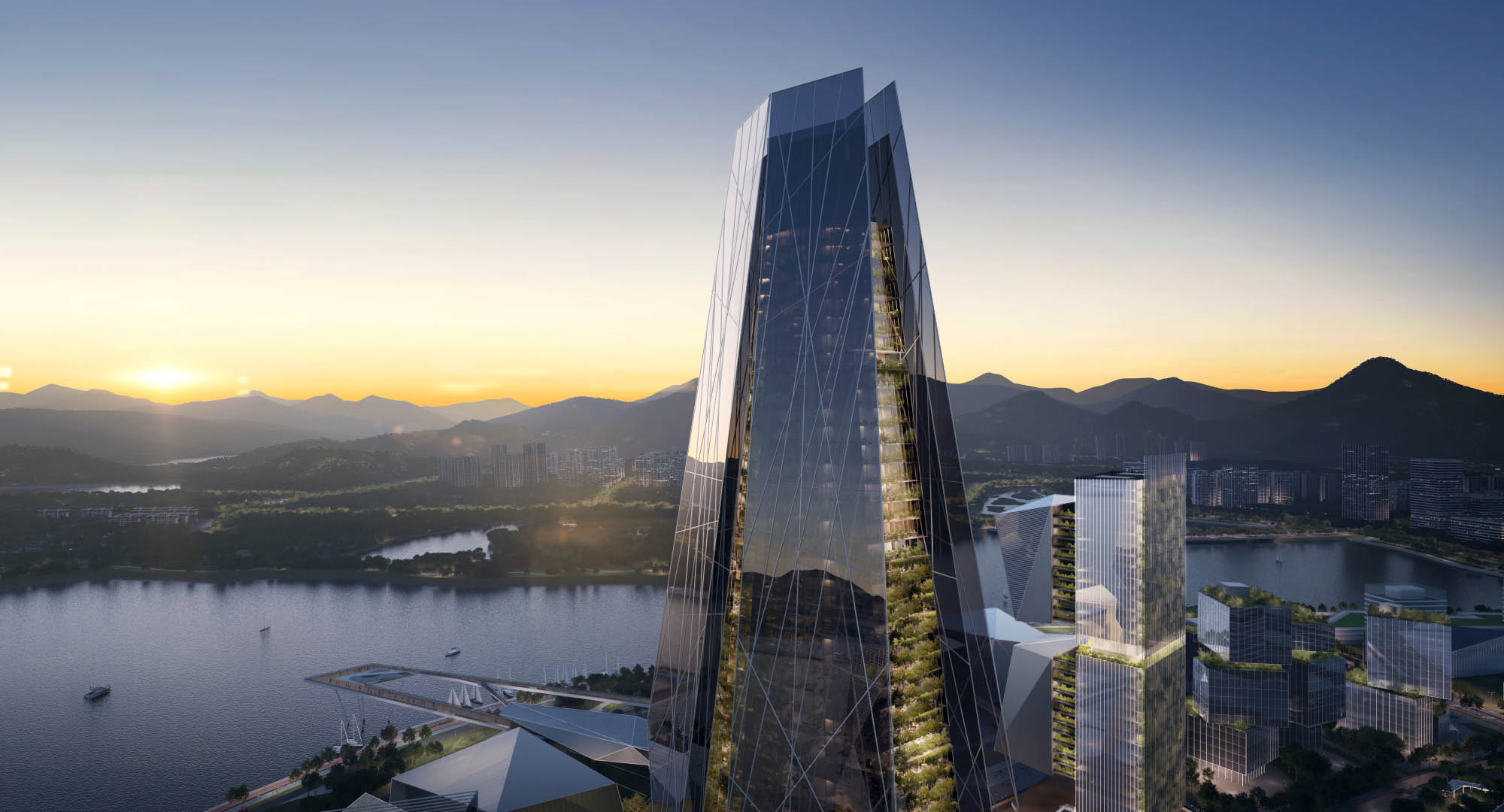
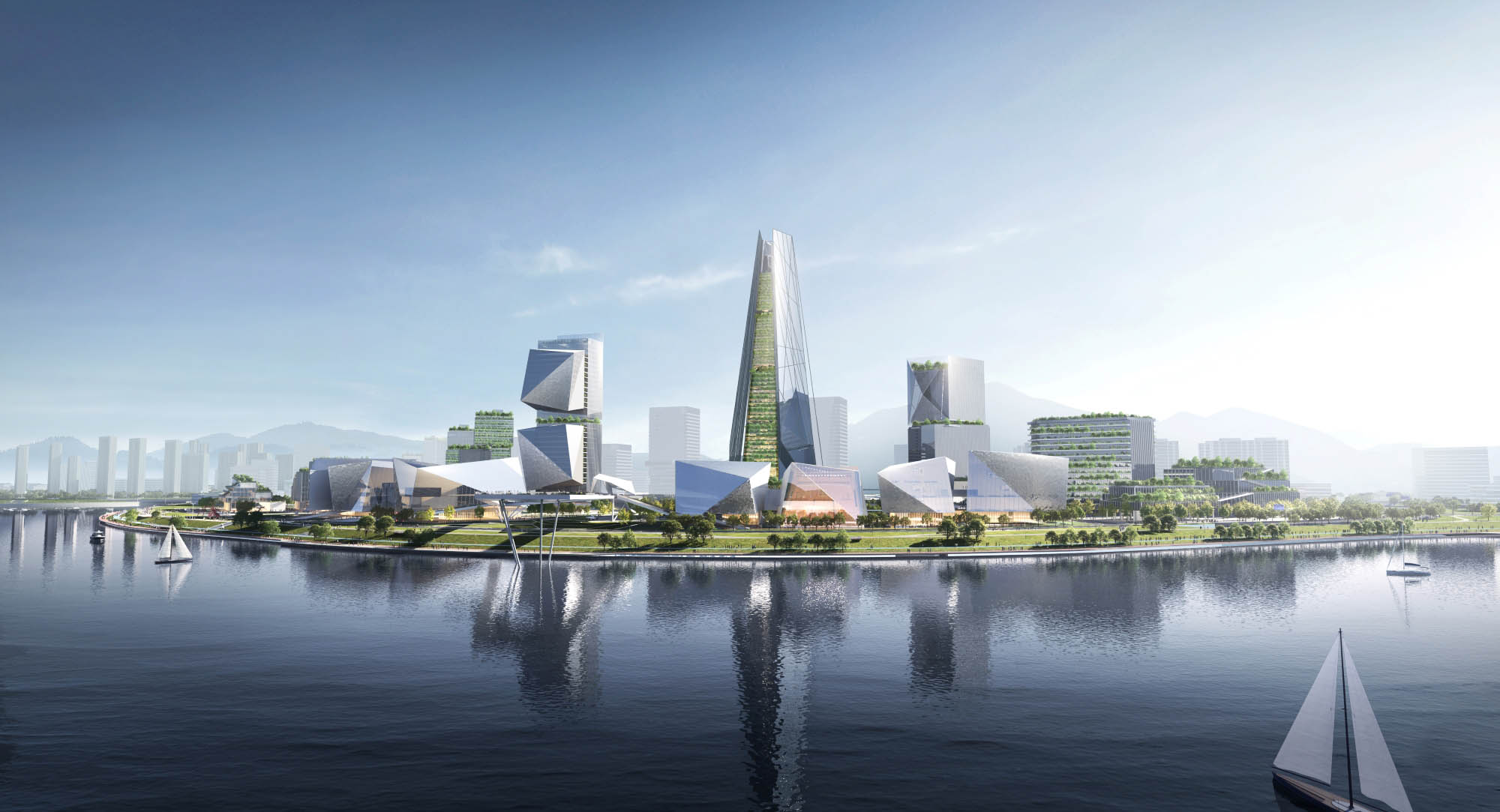
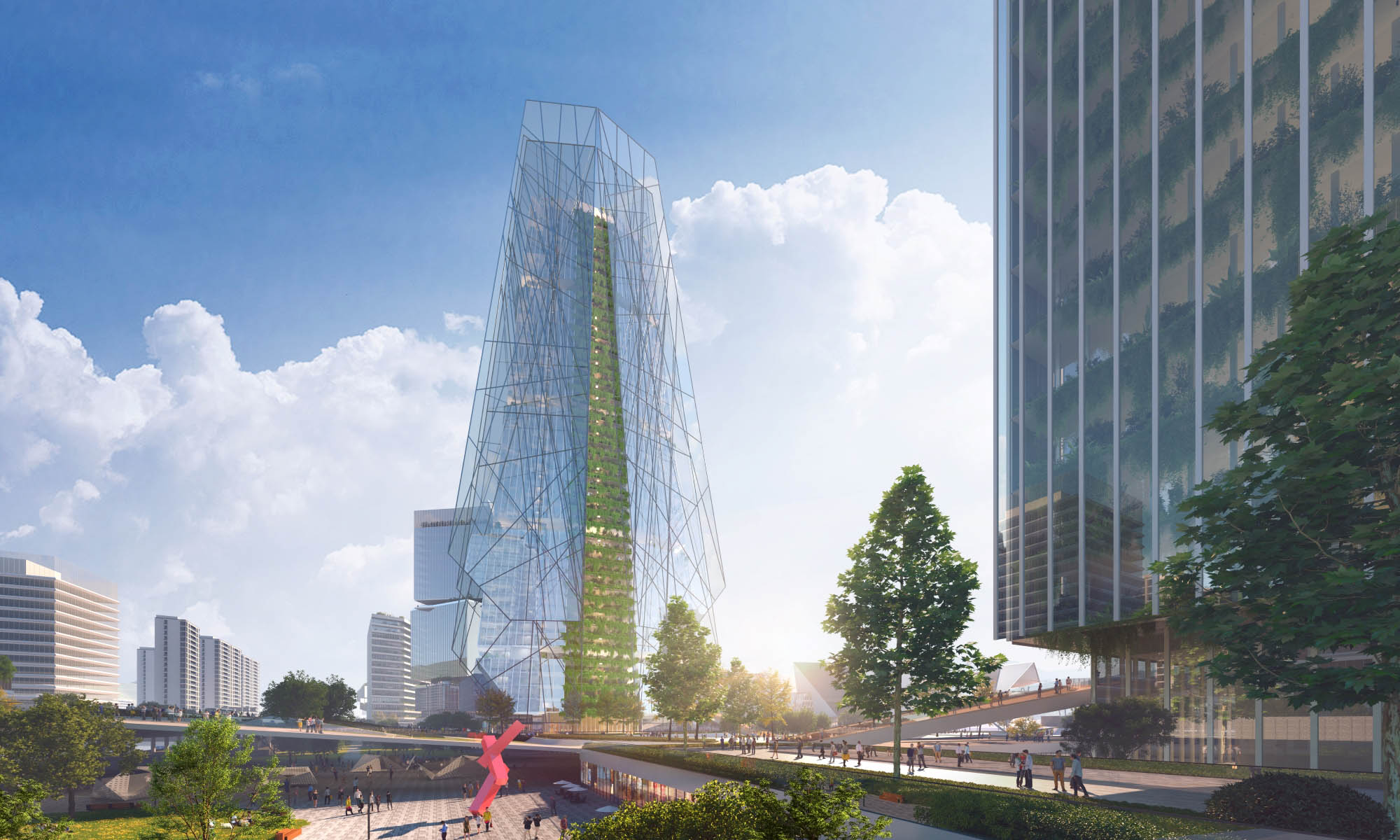
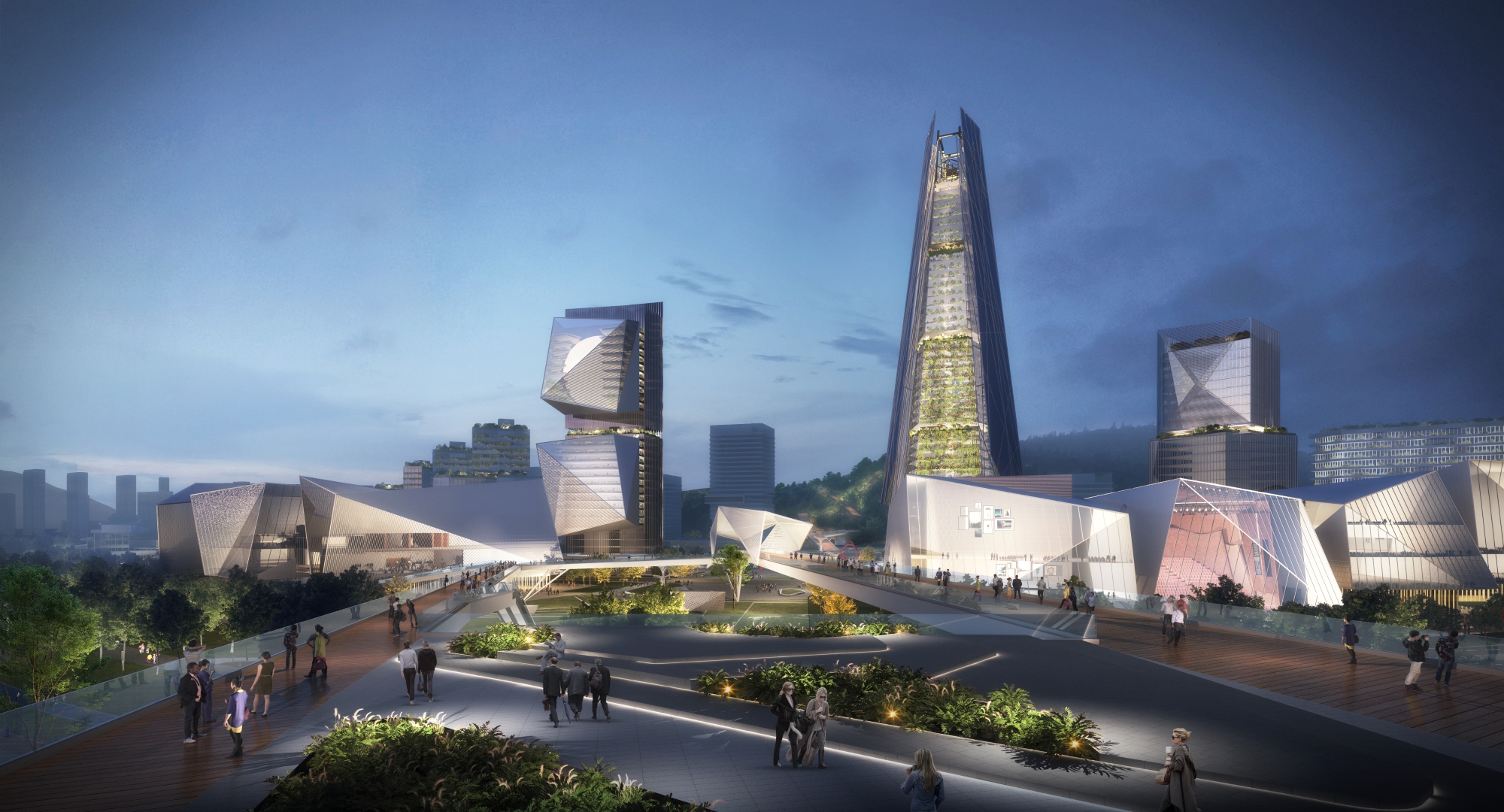
As an important urban gateway, the project places strong emphasis on defining a recognizable skyline along the lakefront. Guided by the principles of layered terraces and visual continuity toward the mountains and water, the tallest tower adopts the abstract form of a dragonfly in motion, while the surrounding volumes descend gradually toward the edges of the site. This composition creates a softer and more dynamic skyline facing Qingshan Lake. A double-skin curtain wall system further enhances the sense of lightness by reducing the visual heaviness typically associated with large-scale towers.
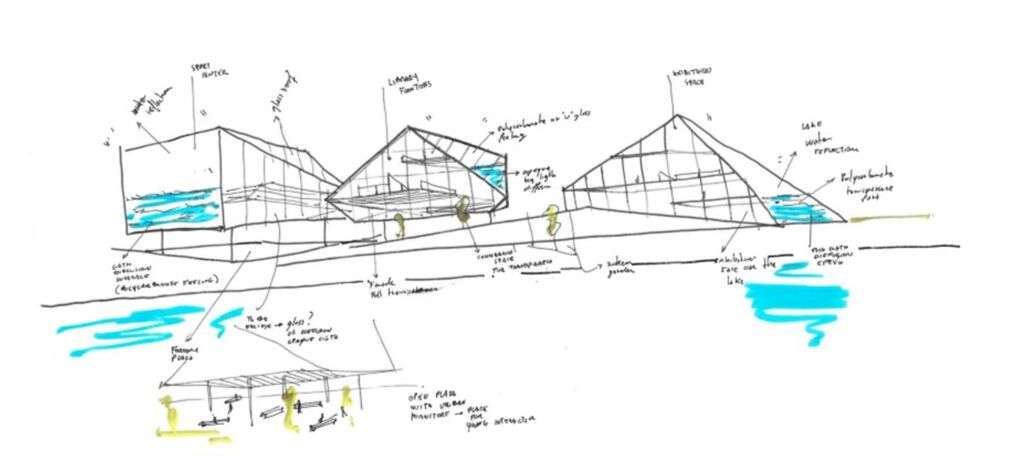
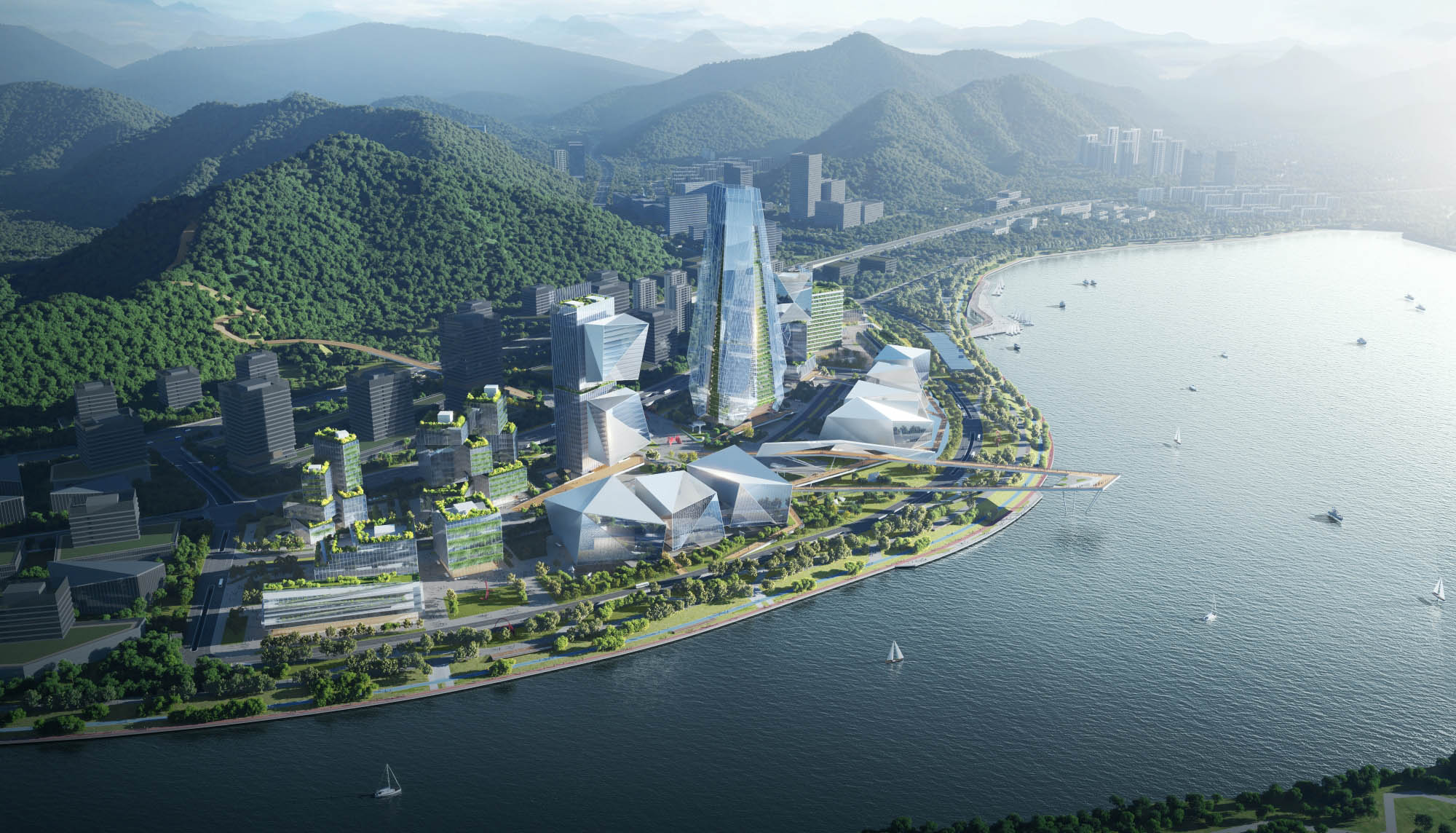
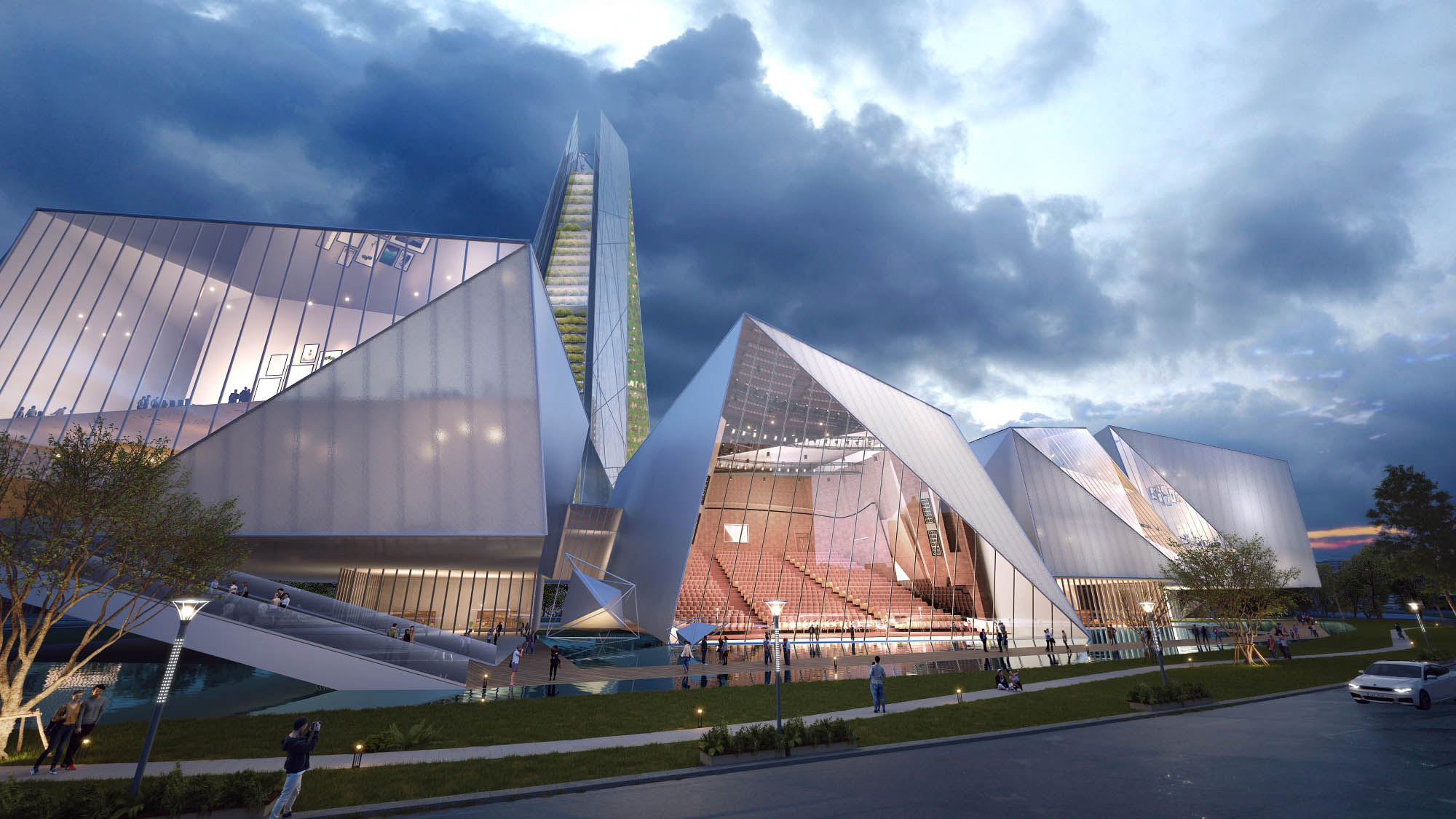
The proposal combines the image of the dragonfly with a second architectural metaphor: riverside stones. The southern building cluster uses geometric forms inspired by scattered rocks along the water’s edge, creating a transition between the natural environment and the taller urban structures behind it. Together with the distant mountains, these fragmented volumes establish a layered lakeside composition rooted in Lin’an’s landscape memory.
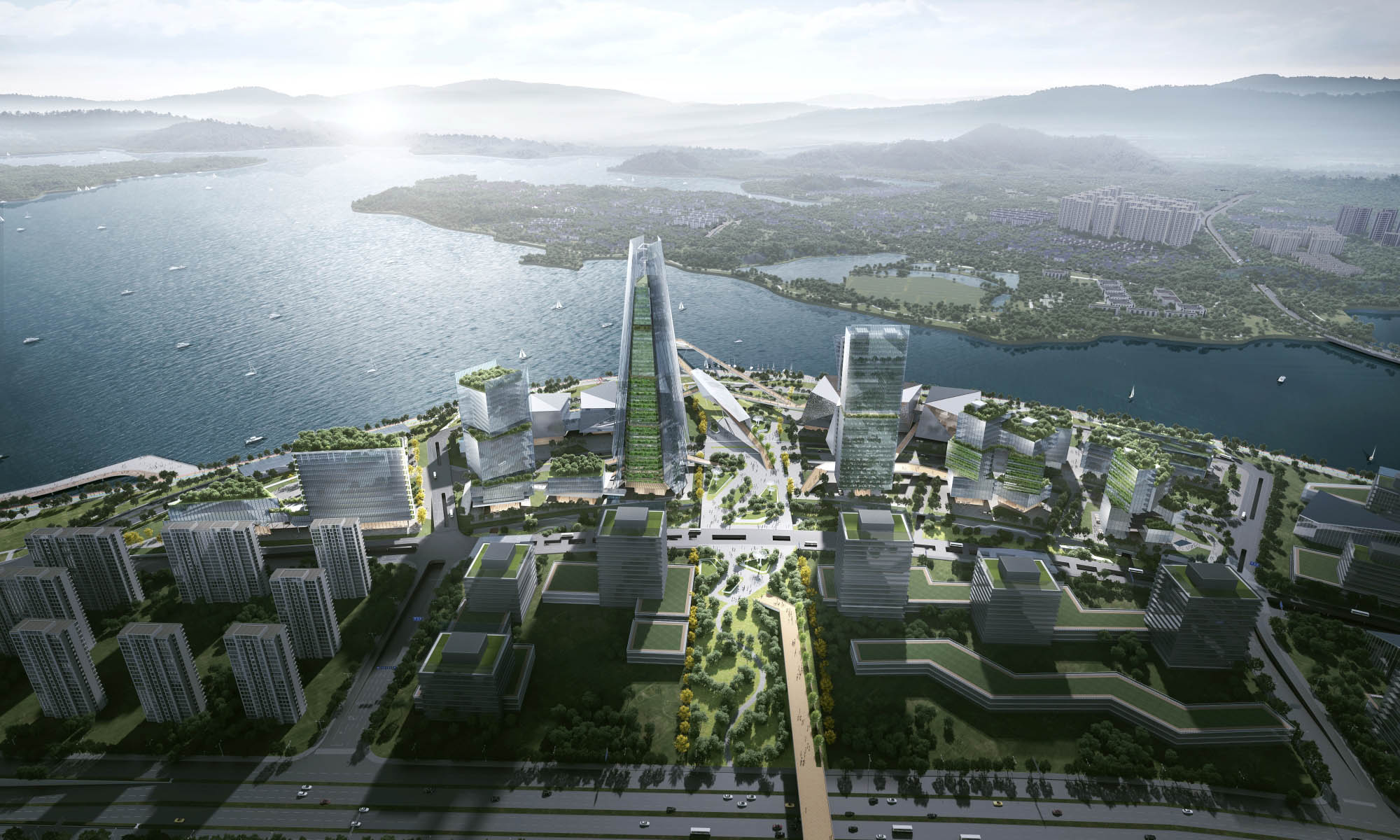
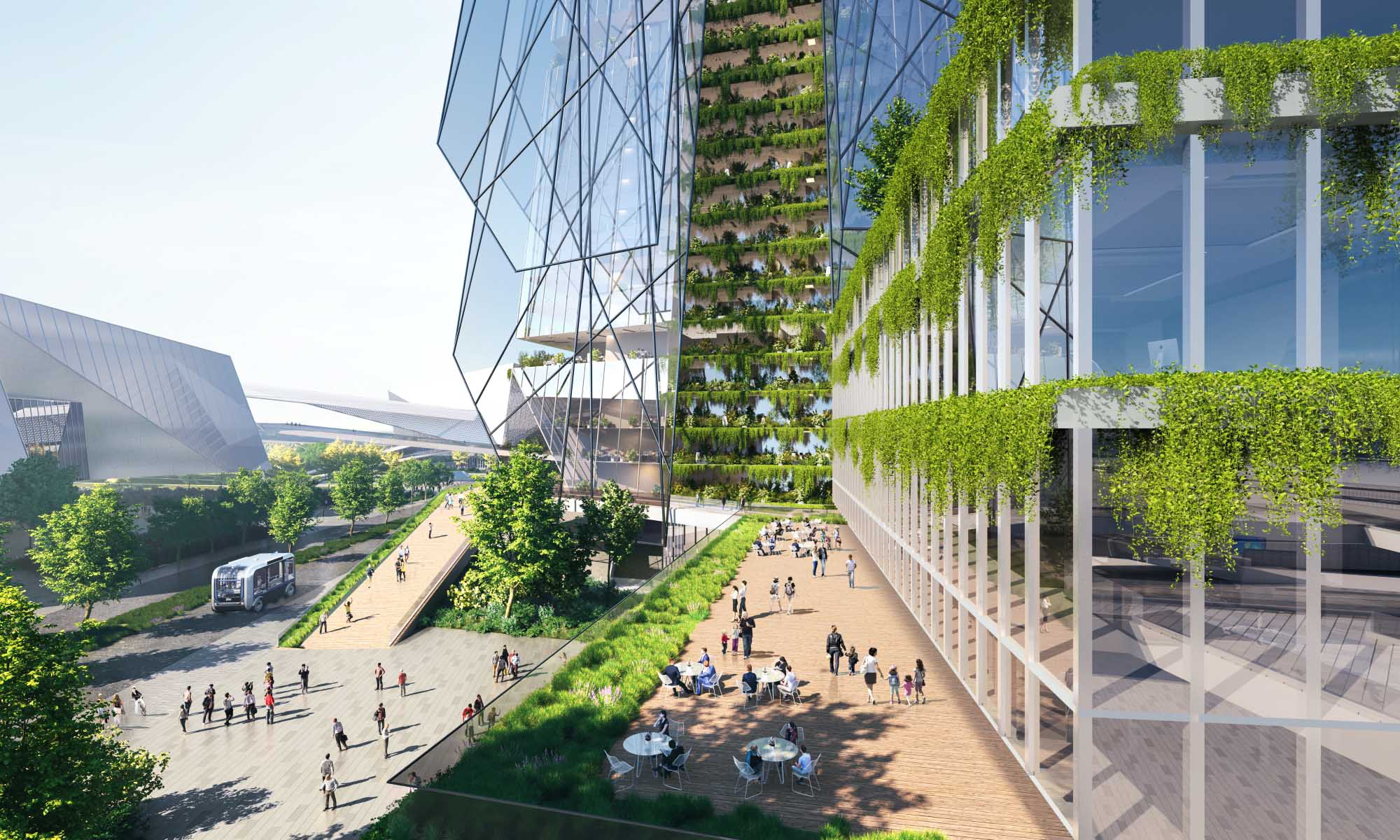
The project also responds to the environmental pressures caused by rapid urban expansion. New developments around the lake risk interrupting the ecological relationship between mountains and water. In response, the architecture is organized as a continuous “green corridor” linking the surrounding natural systems. Ground-level landscapes, vertical greenery, and open public spaces are integrated to preserve biodiversity and reinforce Qingshan Lake’s role as an urban ecological lung.