Ningbo, China
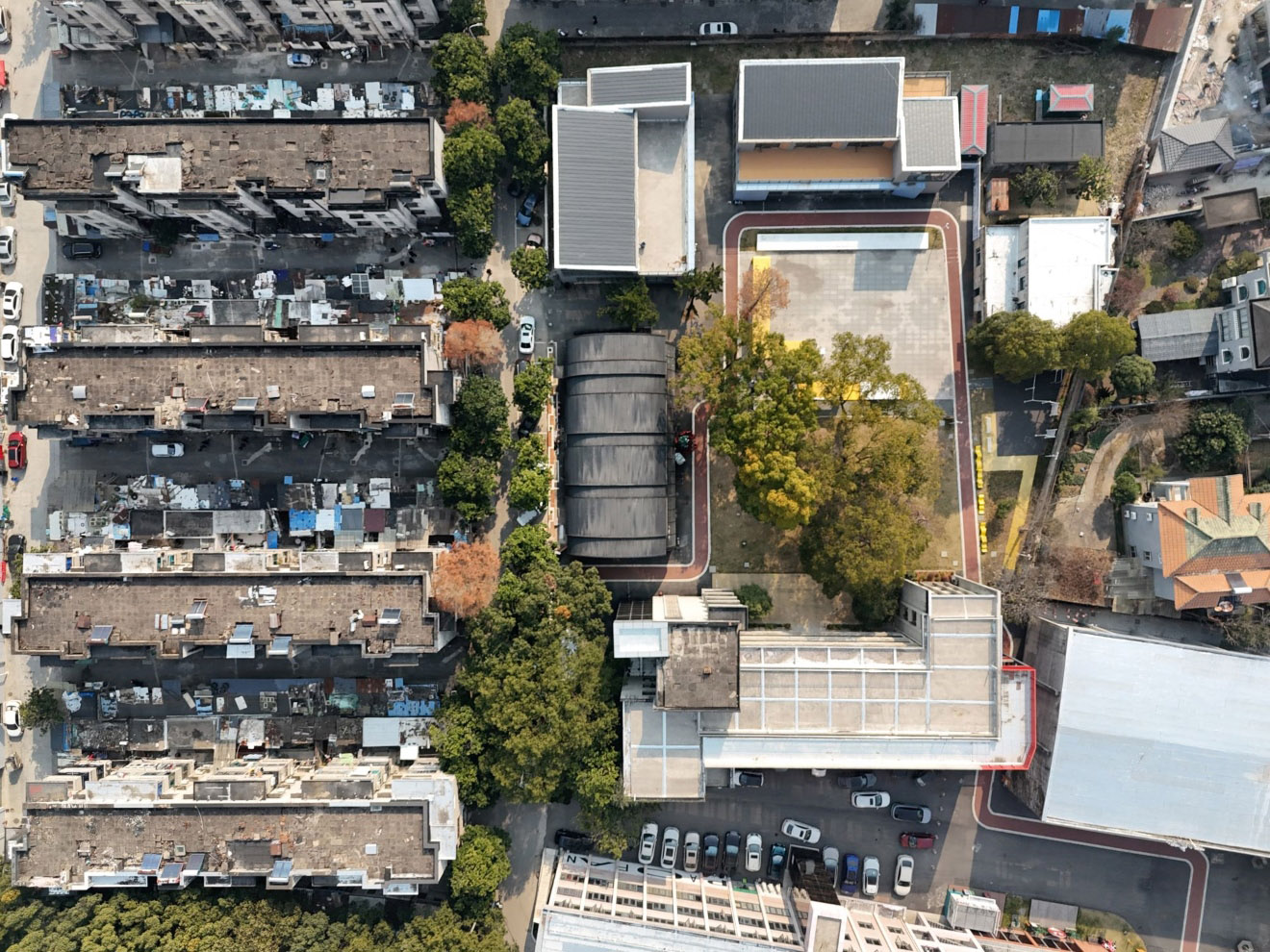
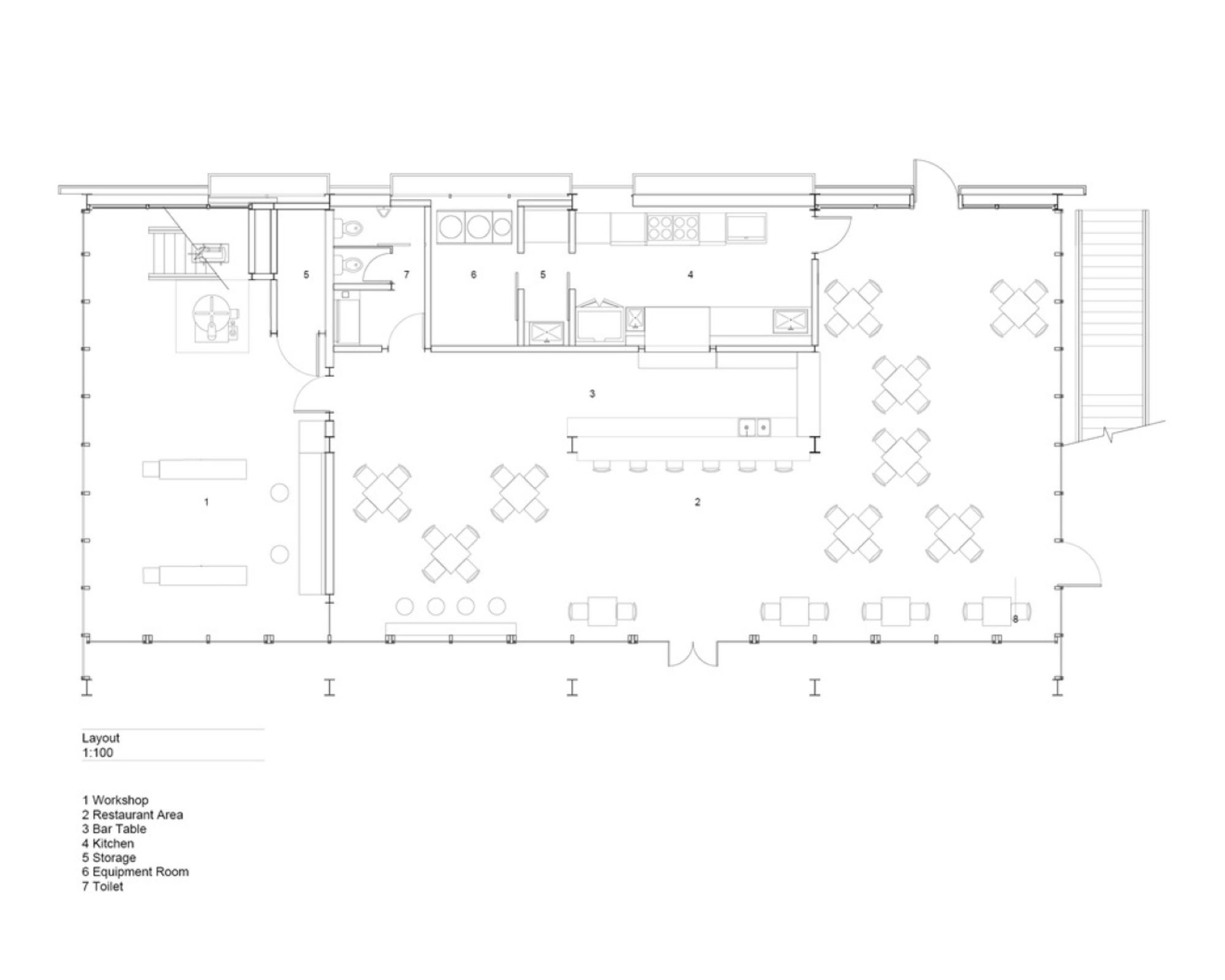
Located in the “Lai IN South” Creative Park in Ninghai, Ningbo, Hangar 35 occupies the site of a former cotton mill built in 1983, preserving traces of the city’s industrial history. Centered around motorcycle culture, the project combines dining, a bar, motorcycle maintenance, and club functions into a multifunctional social venue for riders and enthusiasts. The design retains the memory of the original factory while reflecting the owner’s identity as a motorcycle collector, creating a space defined by industrial aesthetics and social interaction.
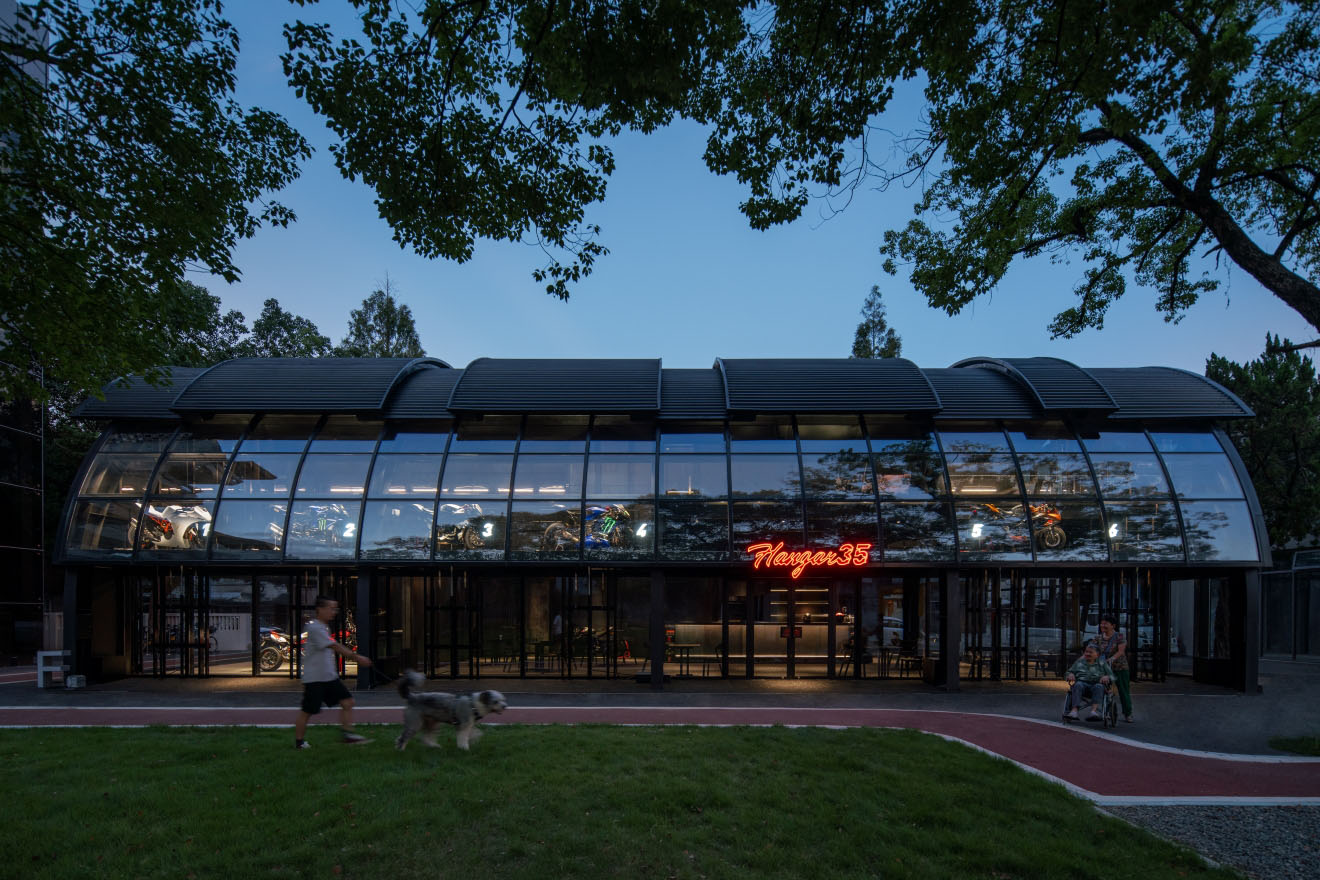
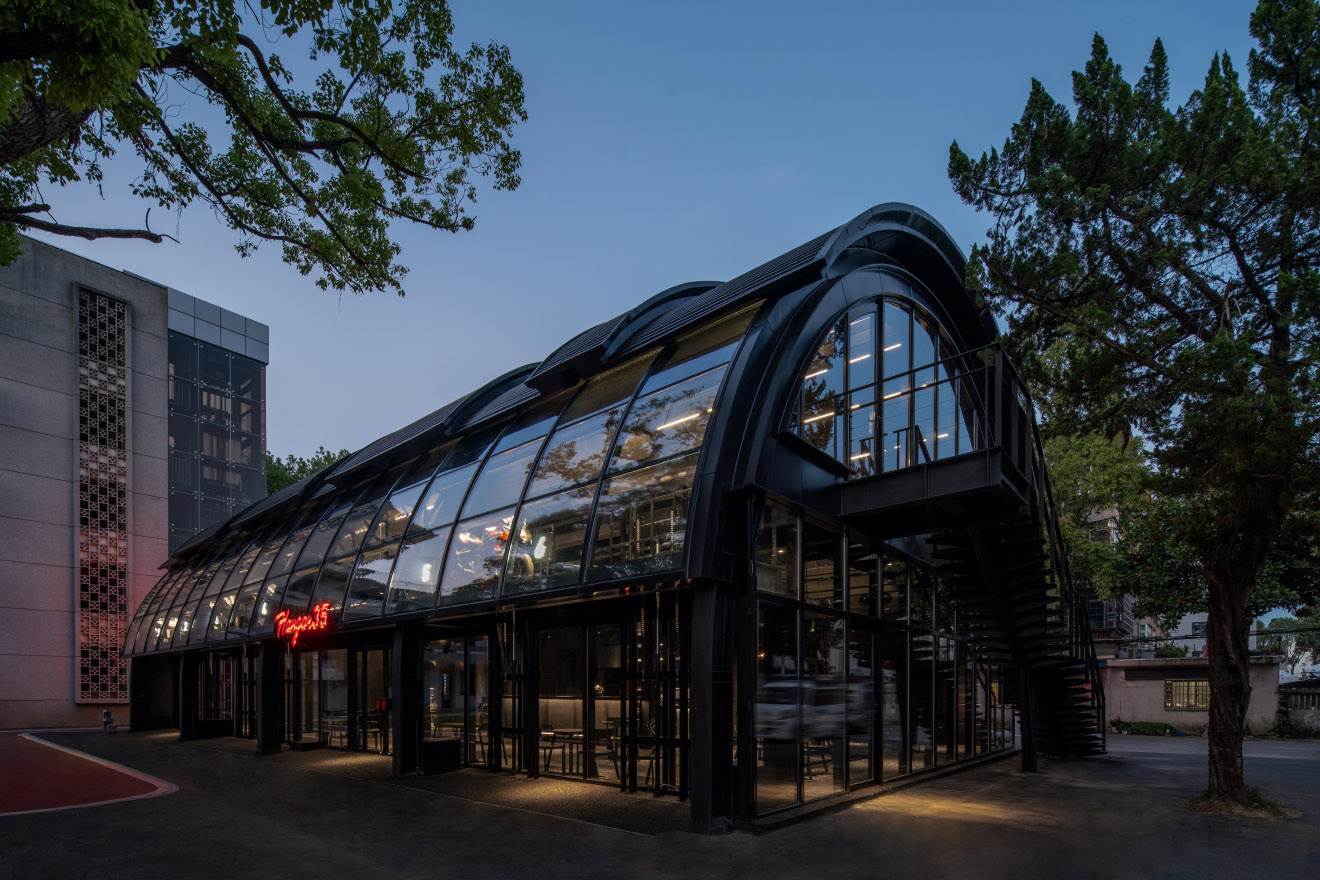
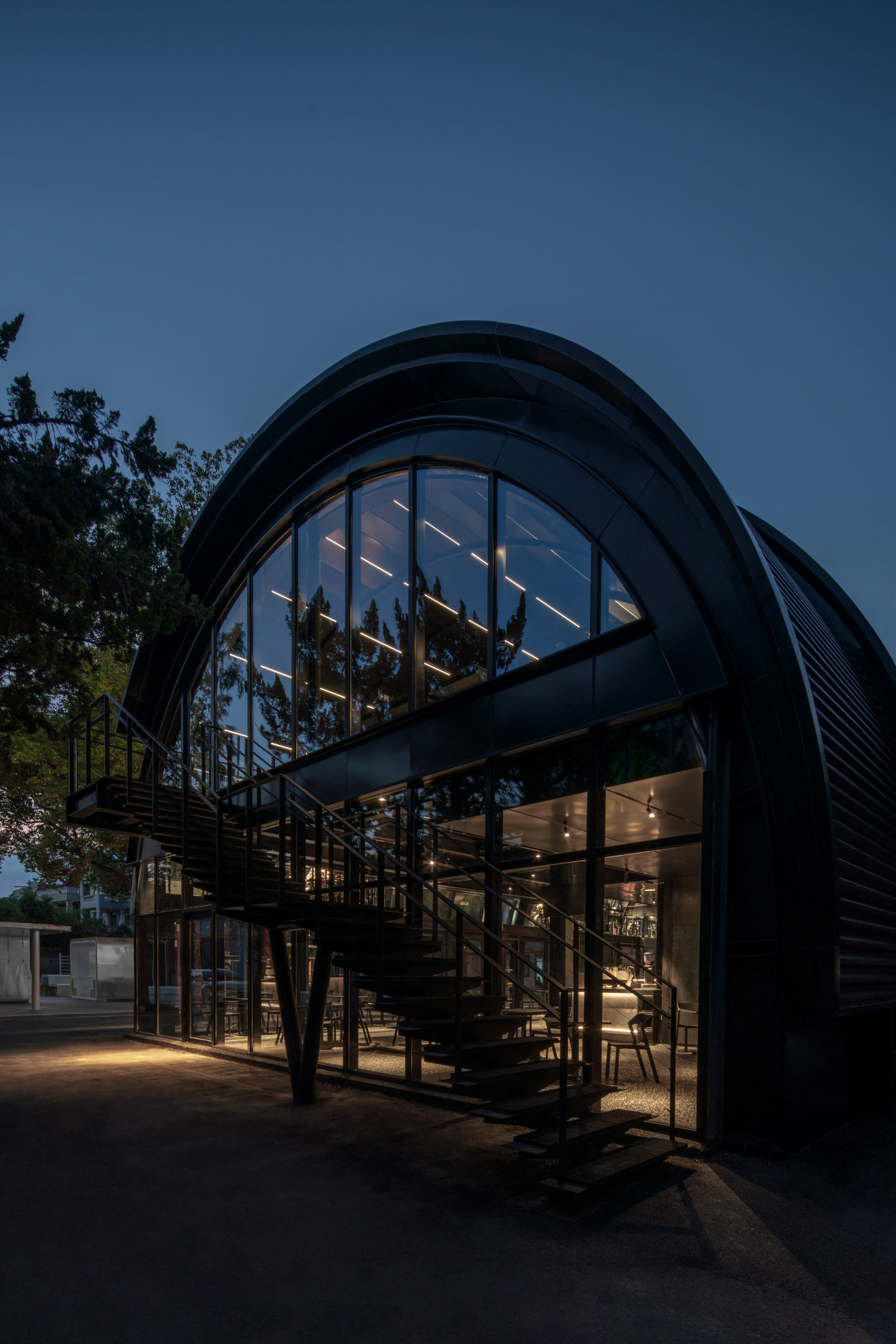
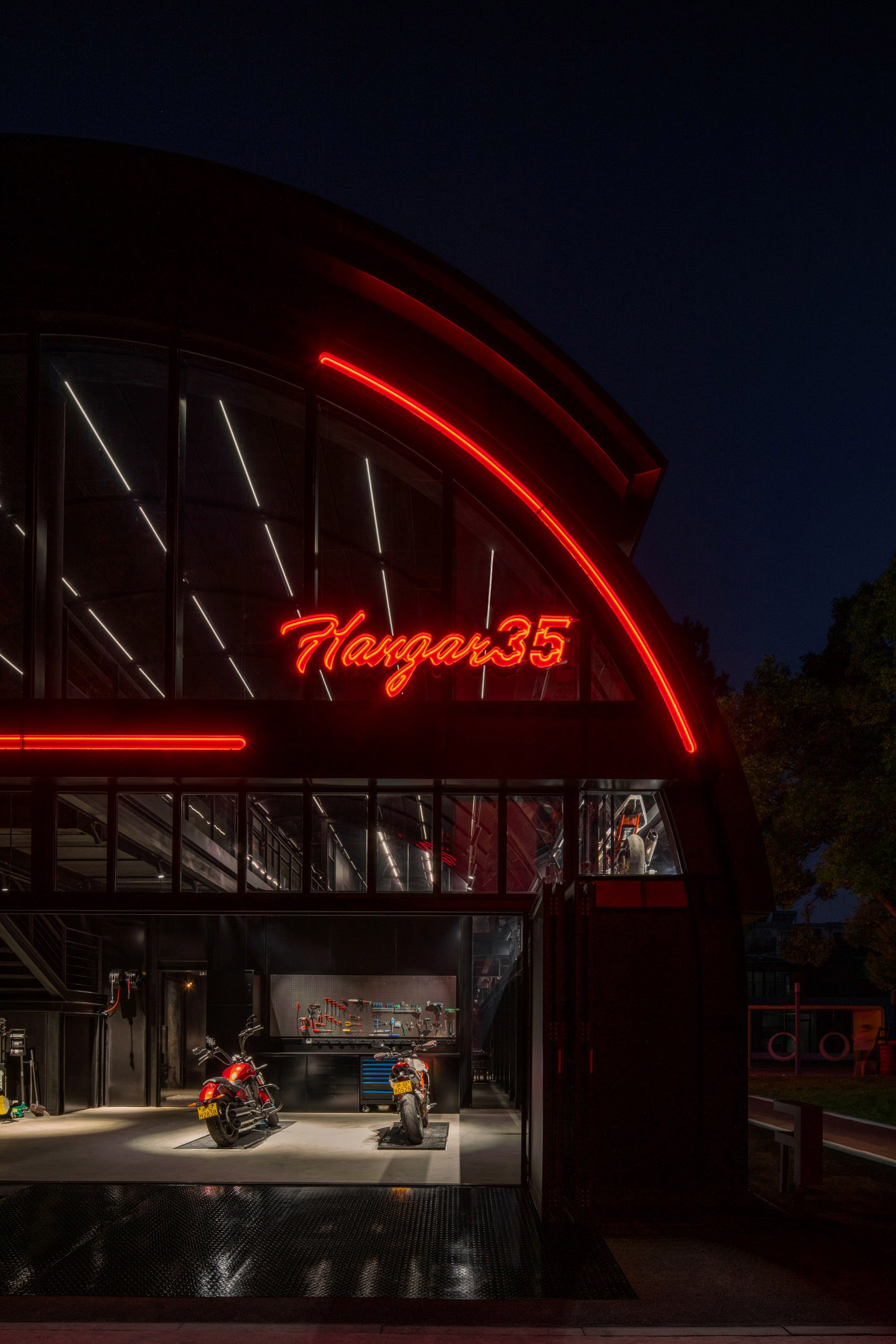
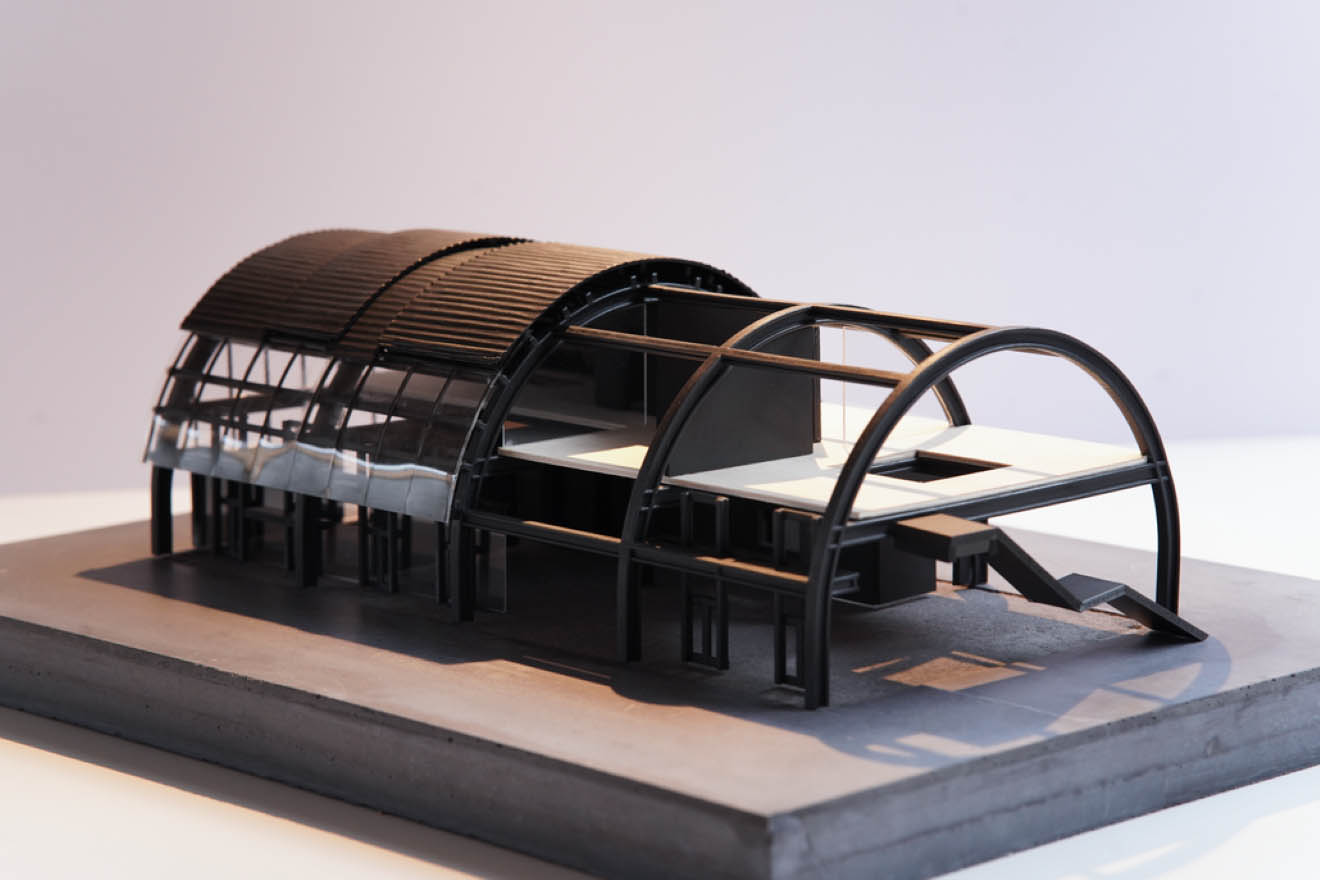
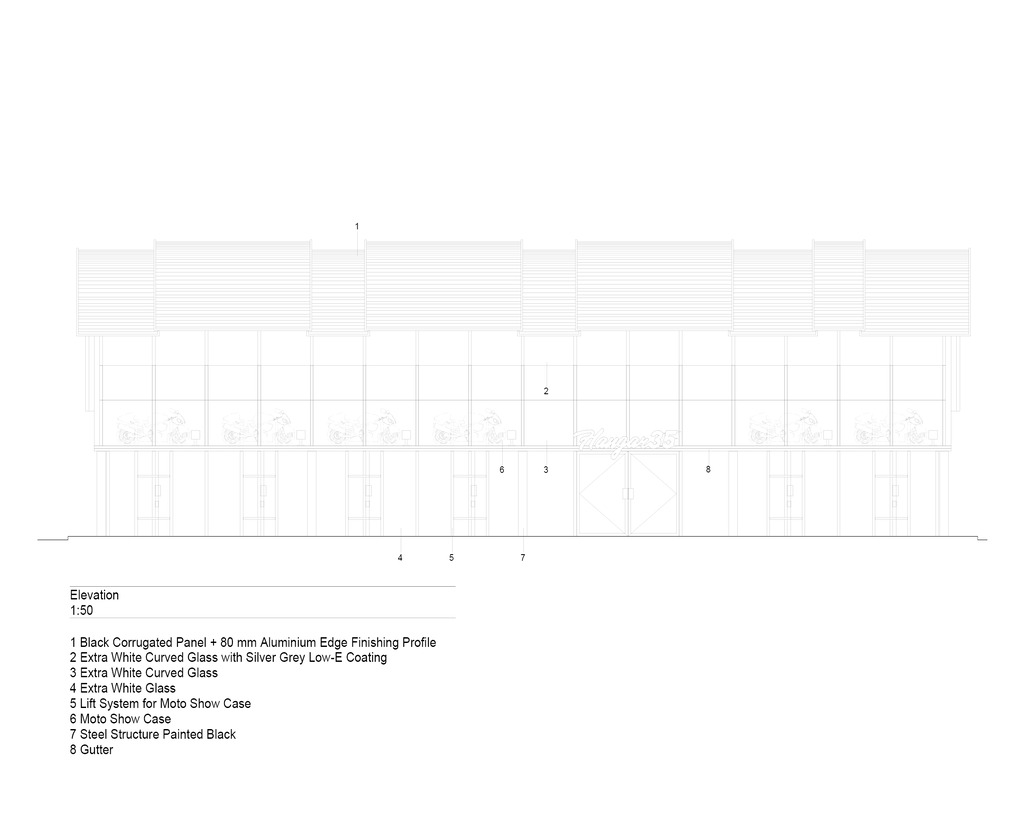
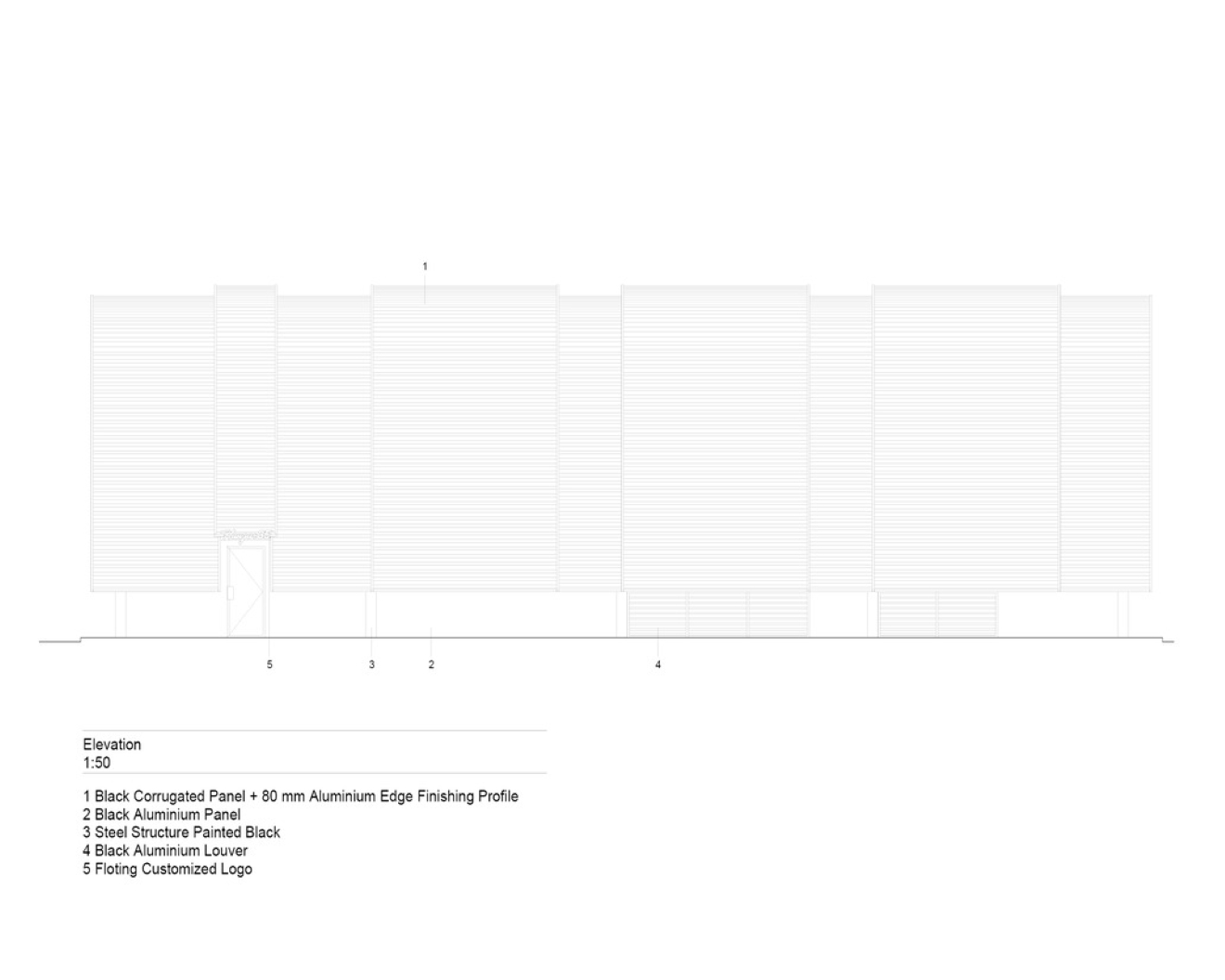
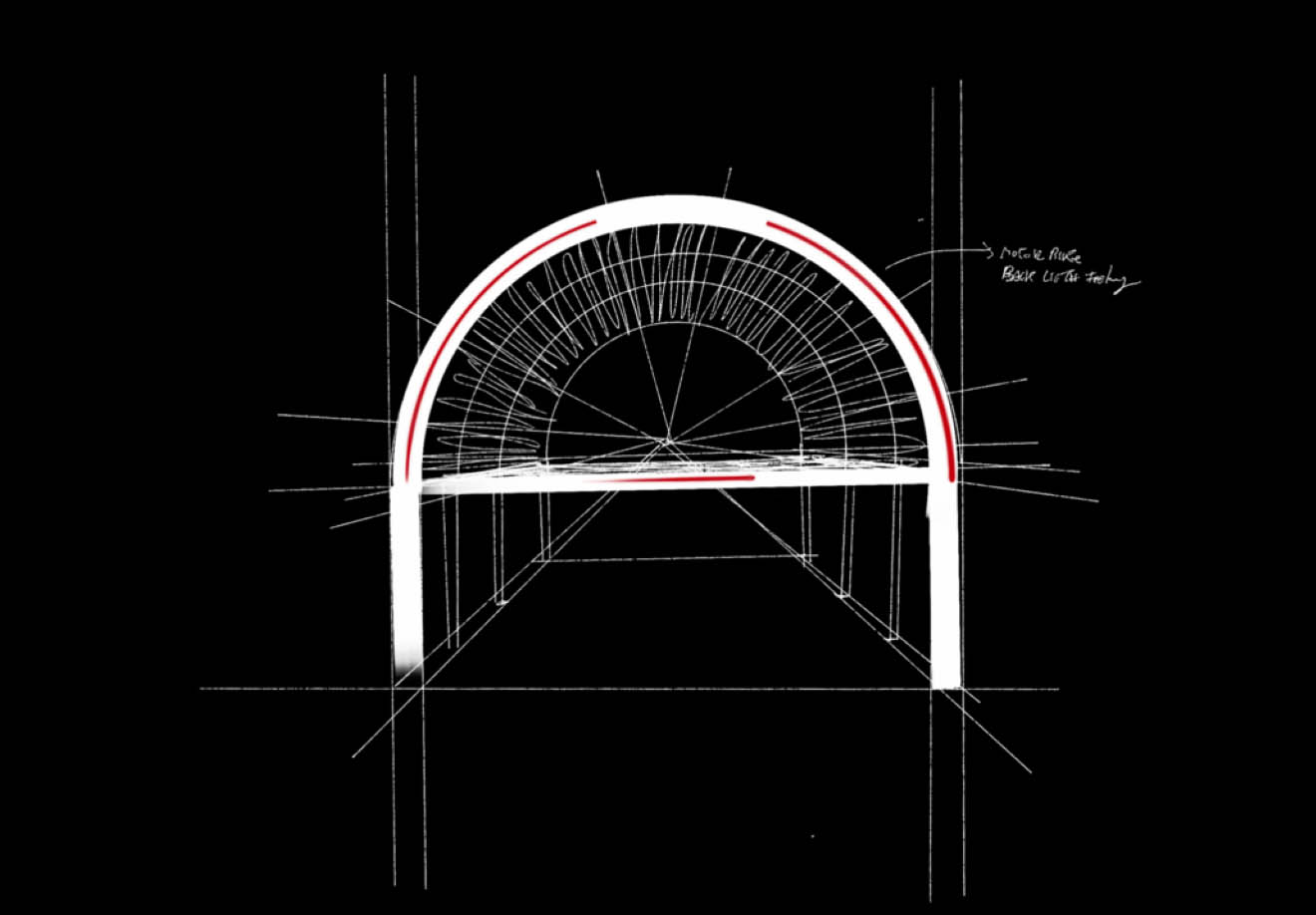
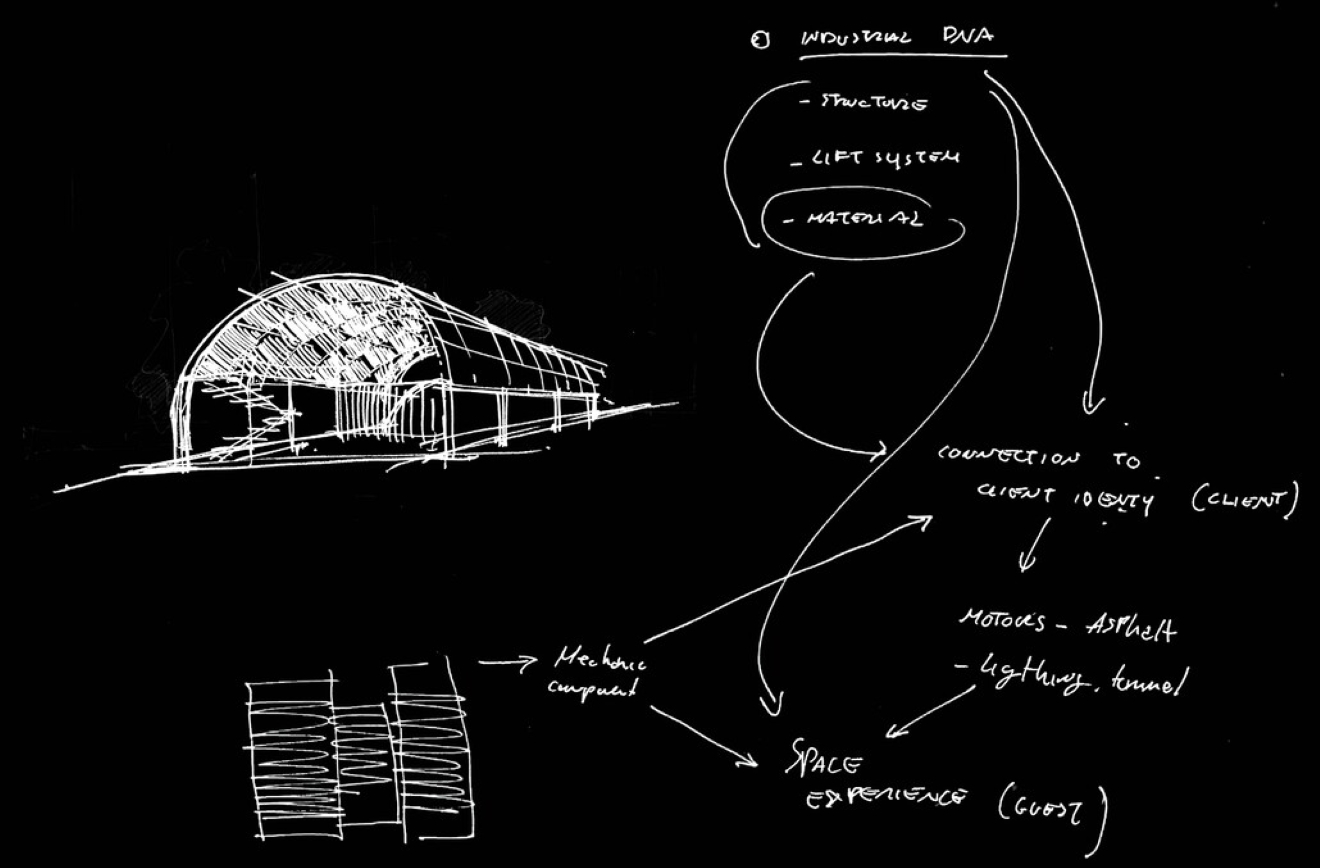
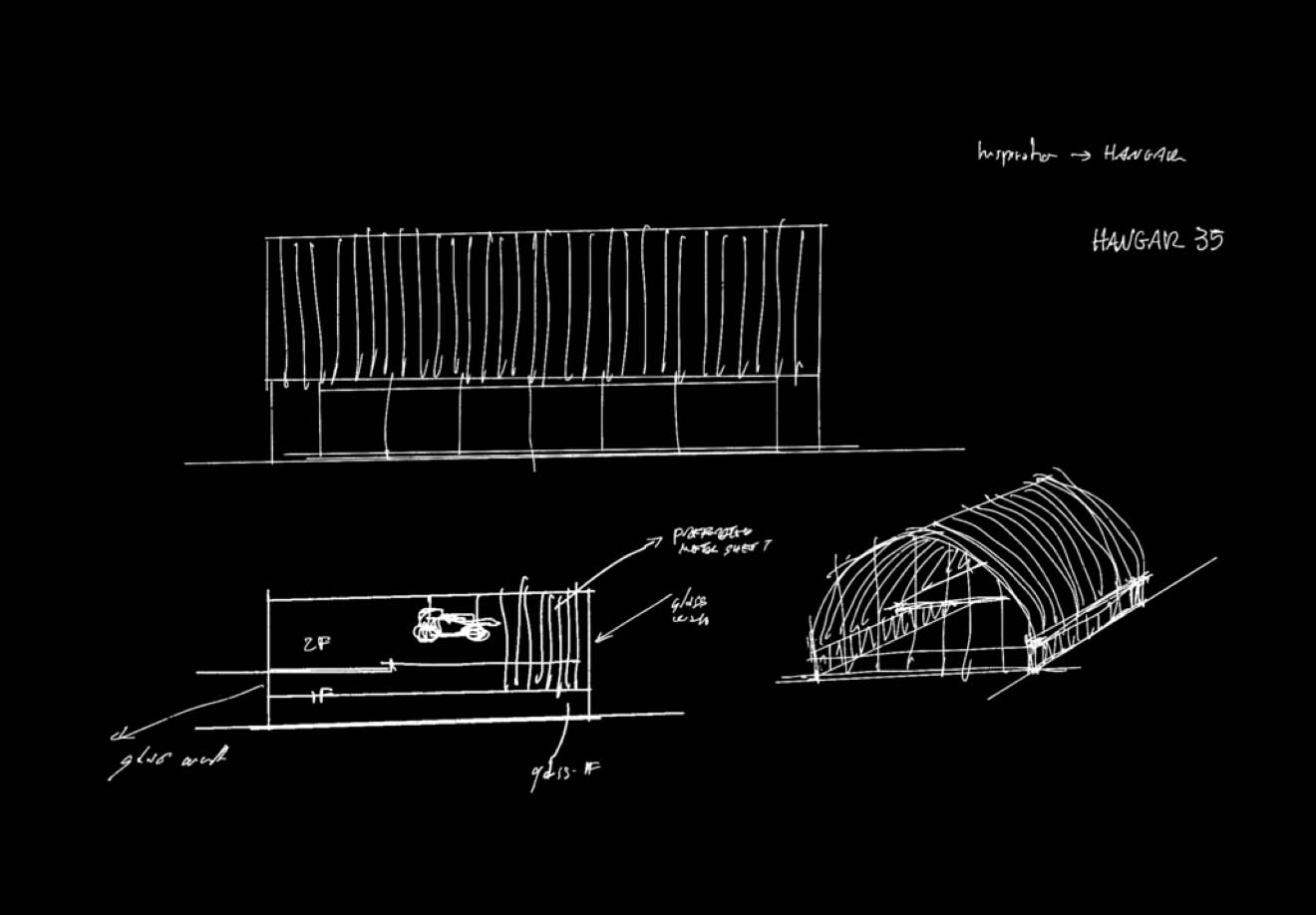
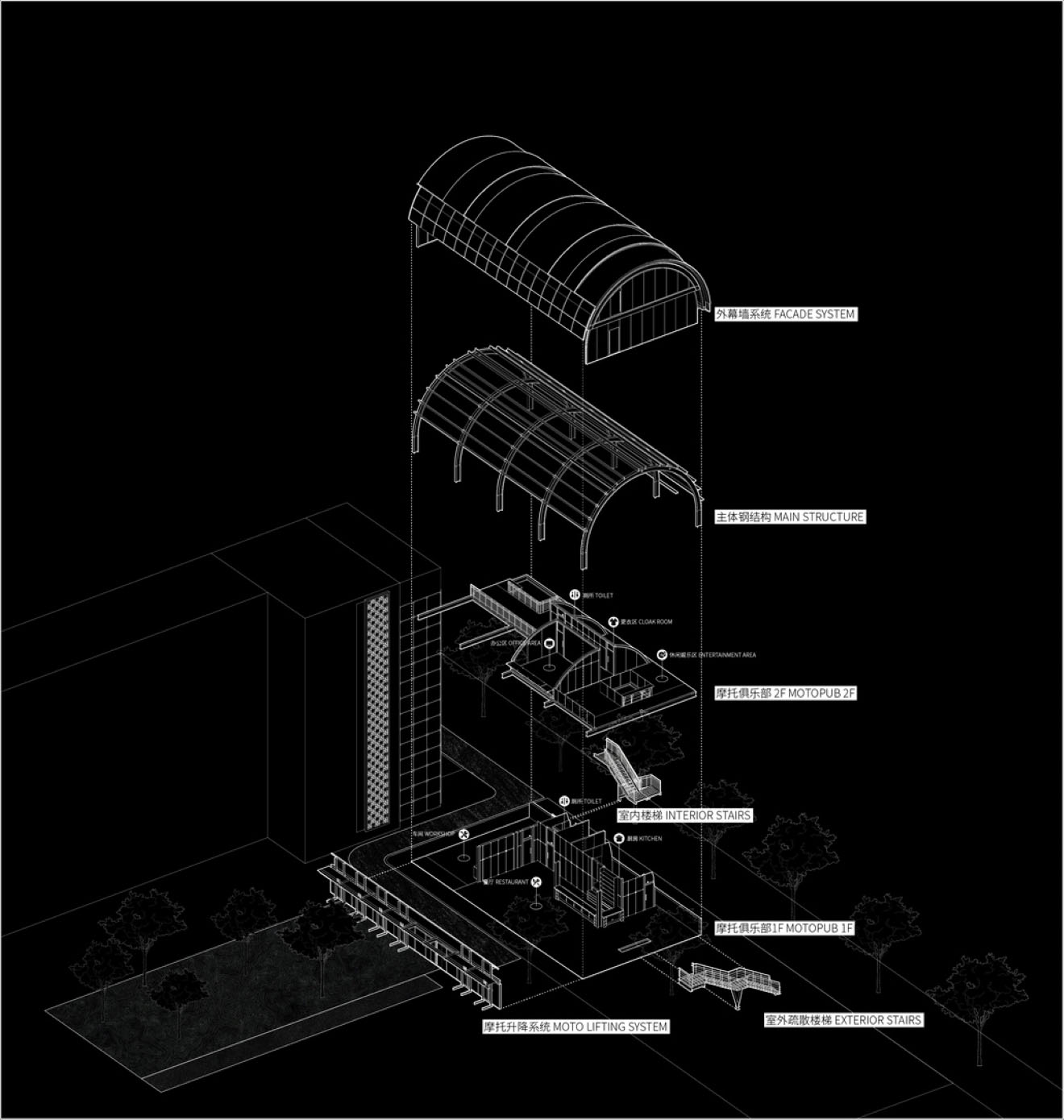
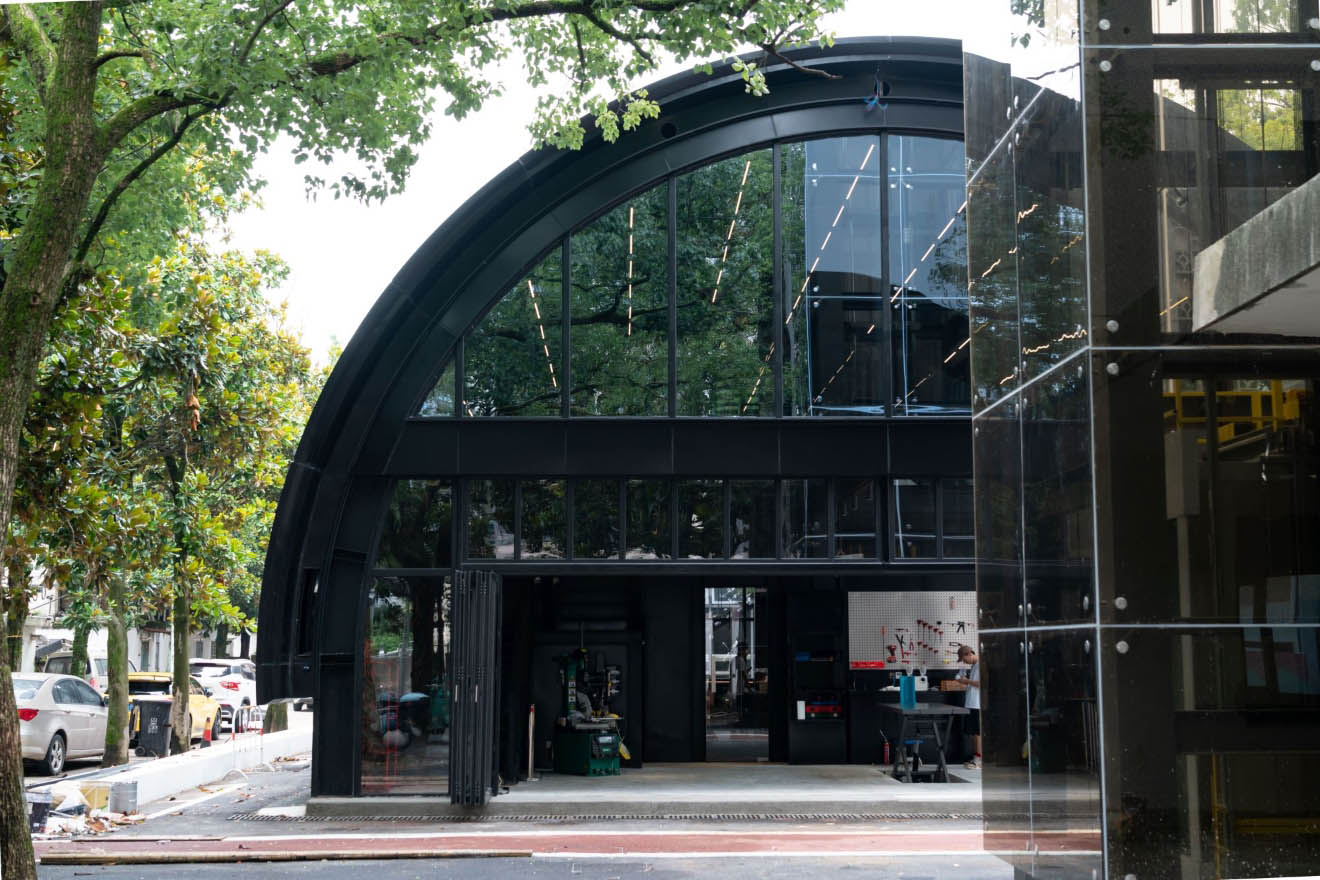
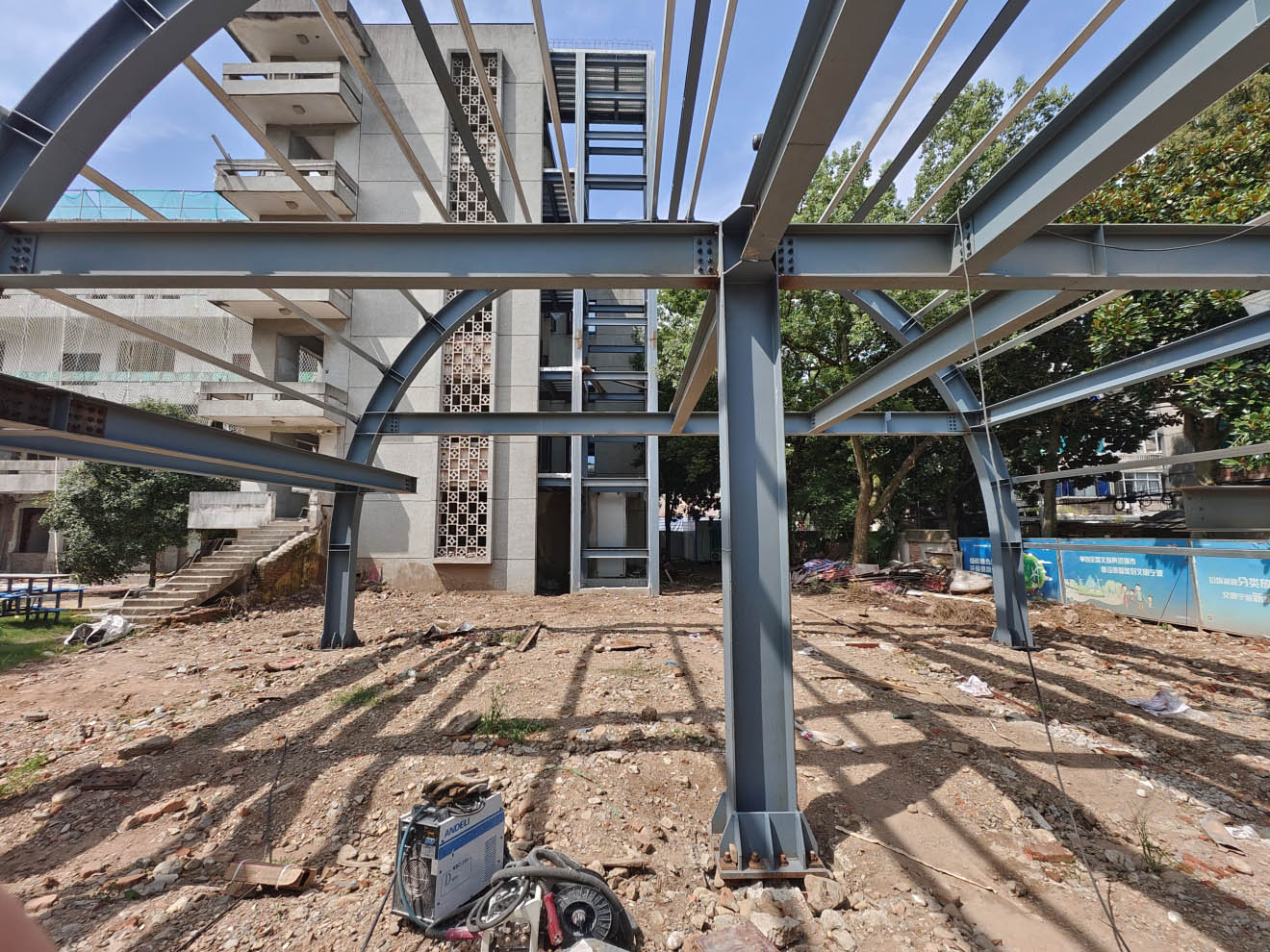
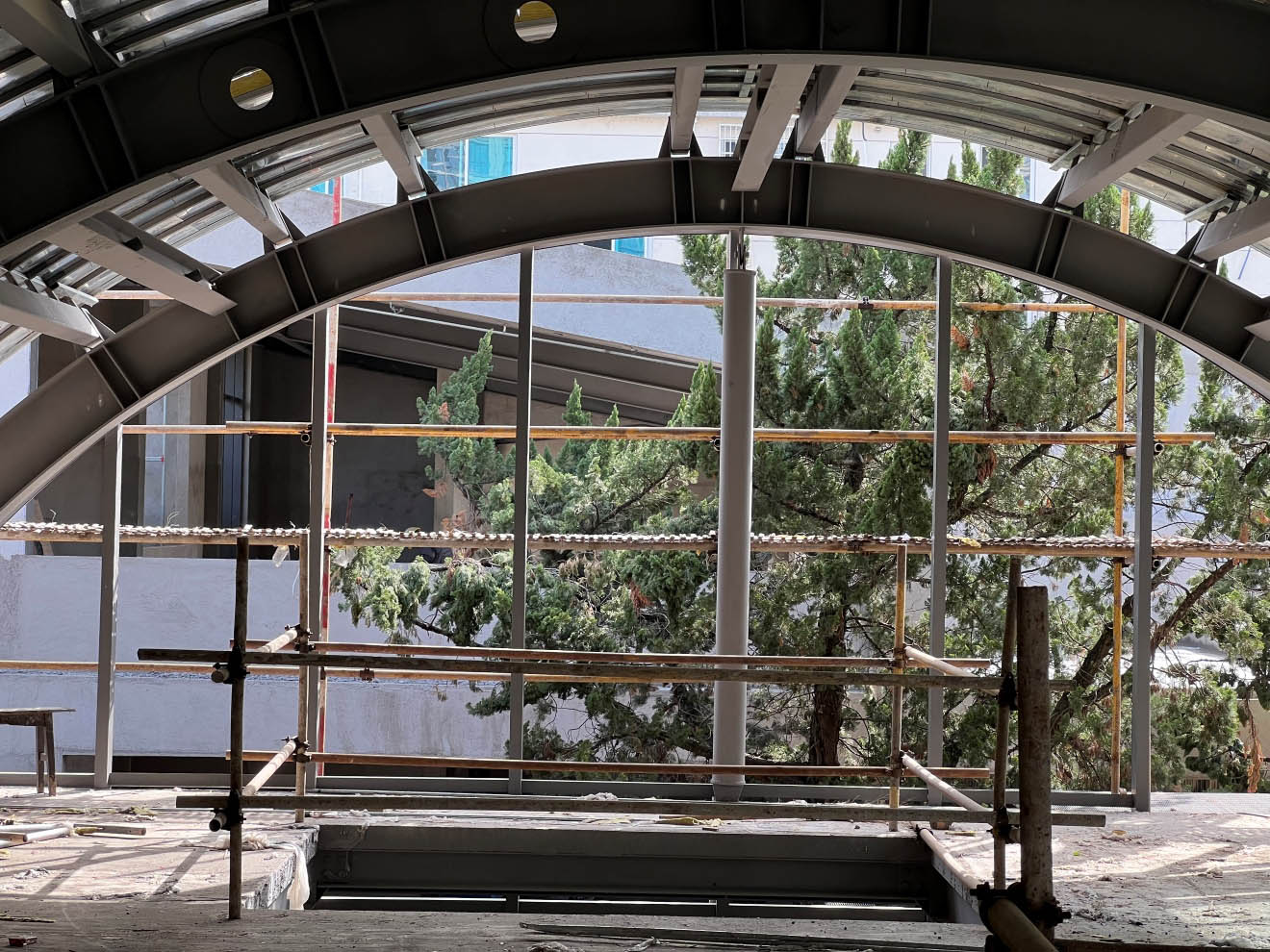
The name “Hangar” refers to a place for motorcycle storage, maintenance, and customization. Architecturally, the project draws inspiration from the structure of an aircraft hangar. The building adopts a classic arched form composed of black metal and curved glass, creating a strong industrial image with a futuristic character. Full-height curtain walls on both sides introduce natural light and visually connect the interior with the surrounding park landscape.
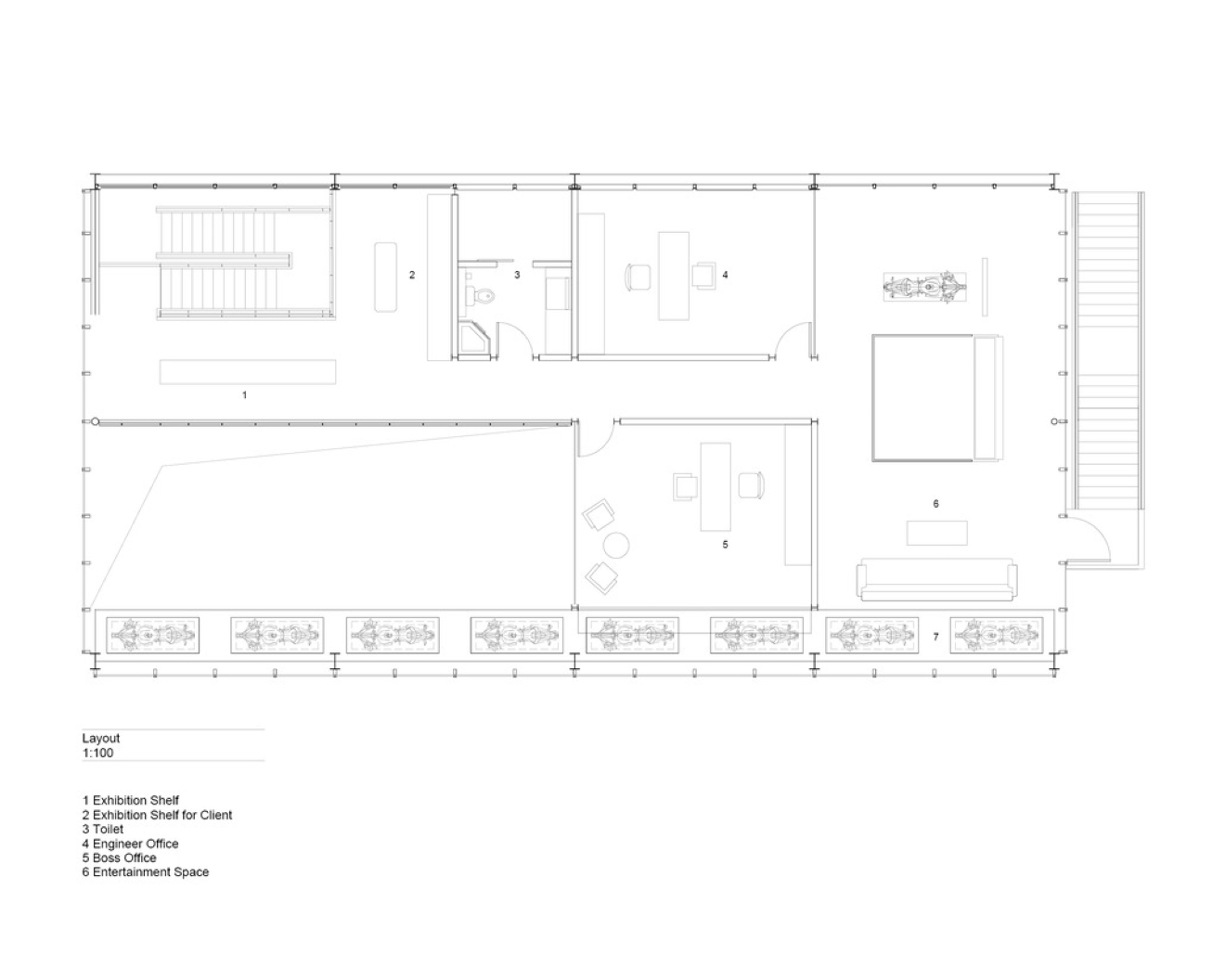
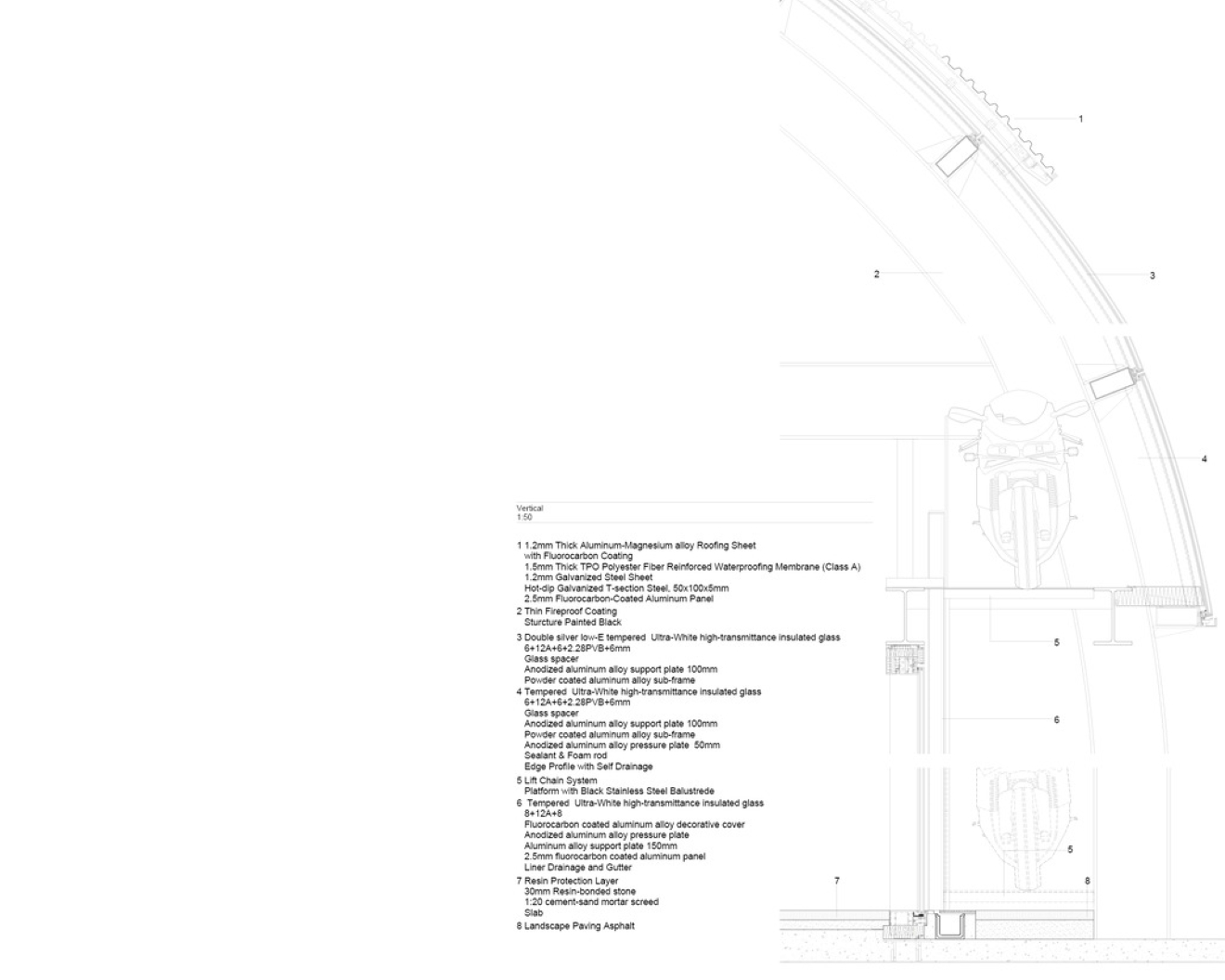
The vertical lift platform embedded within the curtain wall system becomes the project’s most recognizable feature. During the day, the platform remains at ground level, allowing motorcycles to function as interactive exhibits for visitors while also becoming a visual backdrop for the restaurant interior. At night, the platform rises and transforms the motorcycles into elevated display pieces integrated into the second-floor façade. Visible through ultra-clear glass, the lifting process turns the “Motorcycle Catwalk” into a dynamic architectural performance.
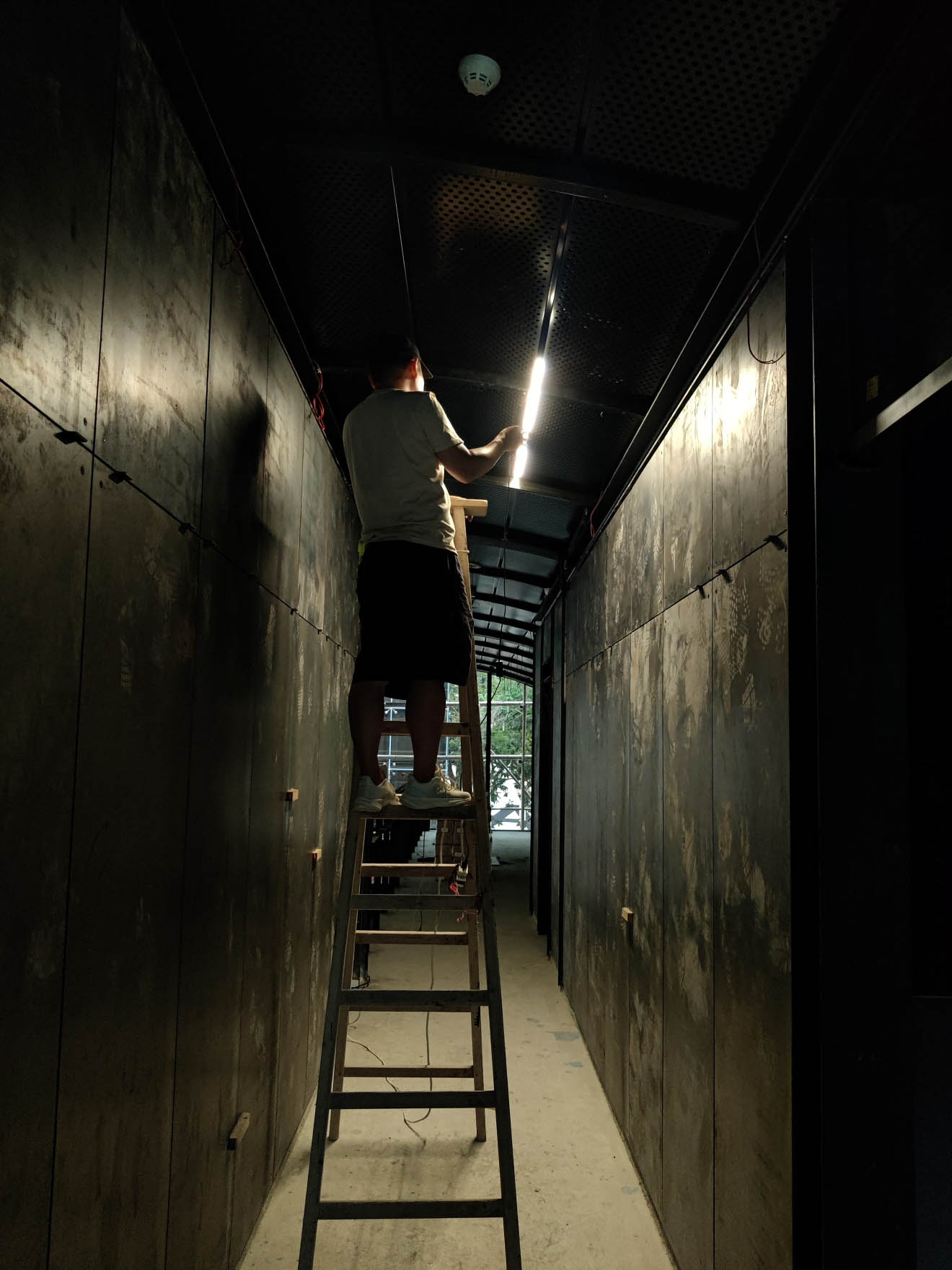
A unified palette of black materials defines the visual identity of the project. Hot-rolled steel panels preserve natural textures and traces of oil stains, reinforcing the industrial atmosphere. The flooring uses a resin-bound gravel surface resembling asphalt, visually extending the outdoor roadway into the interior. On the second floor, the arched ceiling and linear lighting create the sensation of moving through a high-speed tunnel, while the red arc-shaped lighting on the façade references motorcycle brake lights.